
Hate Speech in India
For Prelims: Law Commission, Article 19(1)(a), SC/ST (Prevention of Atrocities) Act, 1989, Protection of Civil Rights Act, 1955, Untouchability, End-to-end encryption, Right to Privacy, Fast-Track Courts, Machine Learning, Human Rights.
For Mains: Key recommendations of OSLC on hate speech and hate crime, Key facts regarding hate speech and hate crime, Challenges in curbing hate speech and hate crime and way forward.
Why in News?
The Odisha State Law Commission (OSLC) has submitted a comprehensive recommendation for the Odisha Hate Speech and Hate Crimes (Prevention) Act, 2026, aiming to curb hate speech and hate crimes through stringent penal and preventive measures.
Summary
- Odisha proposes a stringent Hate Speech Act with cognisable offences, digital content removal, and 7-year jail for repeat crimes.
- Existing BNS provisions and judicial guidelines remain inadequate against online hate.
- Balancing Article 19 freedoms with public order requires clear definitions, AI moderation, and social resilience.
Key Recommendations of OSLC on Hate Speech and Hate Crime
- Penal Provisions: The draft proposes imprisonment from 1 to 5 years for first-time offenders (with a Rs 10,000 fine) and up to 7 years for repeat offences (with a Rs 50,000 fine).
- Classification of Offences: Crimes under the Odisha Hate Speech and Hate Crimes (Prevention) Act, 2026 would be classified as cognizable and non-bailable, allowing for arrests without a warrant and requiring stricter judicial scrutiny for bail.
- Expansive Definition: It defines "Hate Speech" as any public expression (spoken, written, or electronic) intended to cause hatred or ill will on grounds of religion, caste, race, gender, language, disability, or place of birth.
- Victim-Centric Approach: The law empowers Judicial Magistrates First Class to award financial compensation to victims based on the gravity of the harm suffered.
- Preventive Measures: Executive Magistrates and senior police officers can initiate proceedings to maintain public order under the Bharatiya Nagarik Suraksha Sanhita (BNSS) based on credible intelligence.
- Digital Regulation: A designated officer (not below the rank of Additional District Magistrate) would have the authority to direct intermediaries and digital platforms to block or remove hate content.
- Organizational Liability: The Act extends criminal liability to organizations, holding every person responsible for its operations accountable unless they prove due diligence or lack of knowledge.
- Exemptions for Public Good: Penalties will not apply to materials (art, science, or literature) proven to be in the interest of the general public good or used for bona fide religious/heritage purposes.
What is Hate Speech and Hate Crime?
- About: As per the 267th Law Commission Report (2017), hate speech refers to words or actions intended to stir hatred against groups based on race, ethnicity, gender, religion, or sexual orientation. It includes visuals, signs, or speech meant to incite fear or violence.
- Hate crimes are criminal acts (like physical assault or mob lynching) motivated by bias against a person’s identity, such as their color, national origin, or disability.
- Legal Remedies:
- Constitutional: Article 19(1)(a) guarantees Freedom of Speech and Expression, but is subject to "Reasonable Restrictions" under Article 19(2) for protecting public order and preventing the incitement of offences.
- Legal framework:
- Bharatiya Nyaya Sanhita (BNS), 2023: Section 196 (formerly IPC 153A) penalizes promoting enmity between groups, and Section 299 (formerly IPC 295A) punishes acts intended to outrage religious feelings.
- Representation of the People Act, 1951: Specifically, Section 8 disqualifies candidates convicted of promoting communal disharmony.
- Special Statutes: The SC/ST (Prevention of Atrocities) Act, 1989 and the Protection of Civil Rights Act, 1955, target identity-based insults and the practice of untouchability.
- Key Judgements on Curbing Hate Speech:
- Shaheen Abdulla v. Union of India (2022): The Supreme Court directed police to register suo motu FIRs in hate speech cases without waiting for a formal complaint.
- Tehseen S. Poonawalla v. Union of India (2018): The Court issued guidelines to curb mob lynching and recommended appointing district nodal officers.
- Shreya Singhal v. Union of India (2015): The SC struck down Section 66A of the IT Act, 2000, ruling that vague restrictions on "annoyance" or "insult" violate Article 19(1)(a).
- Pravasi Bhalai Sangathan v. Union of India (2014): The Court urged the Law Commission to define hate speech to avoid "judicial overreach" in its regulation.
- Related Committees:
- Viswanathan Committee (2015): Recommended inserting Sections 153C(b) and 505A into IPC, penalizing incitement against specific identities—including religion, gender, and disability—with maximum 2 years' jail and Rs 5,000 fine.
- Bezbaruah Committee (2014): Suggested updating Section 153C of IPC (targeting human dignity) with 5-year sentences, and Section 509A of IPC (addressing racial insults) with up to 3 years' imprisonment or fine.
What Hinders the Prevention of Hate Speech and Hate Crime?
- Definitional Dilemma: The lack of a narrow, globally accepted definition for "Hate" leads to legal and definitional ambiguity, potentially causing "chilling effects" on free speech or leaving genuine incitement under-regulated.
- Courts struggle to balance Article 19(1)(a) (Freedom of Speech) with Article 19(2) (Reasonable Restrictions), necessitating a clear distinction between "advocacy" (legal) and "incitement" (illegal).
- The Digital Hydra: Rapid viral content and piecemeal enforcement make digital regulation difficult; banned content often reappears instantly via mirror accounts or anonymous platforms.
- Privacy vs. Policing: End-to-end encryption on platforms like WhatsApp complicates the tracing of the "first originator" of inflammatory messages, creating a conflict between the Right to Privacy (Article 21) and the need for accountability.
- Transnational Legal Conflict: Cross-border content hosting creates jurisdictional barriers, where speech originates in countries with different legal standards (e.g., the US) but triggers public order issues in India.
- Technological Echo Chambers: Social media algorithms often trap users in radicalization loops, while the "Lone Wolf" phenomenon makes preemptive security actions against radicalized individuals acting alone extremely difficult.
- Electoral Gains: The Judiciary has noted that some political actors use exclusionary narratives for mobilization, making hate "politically profitable."
What Measures are Needed to Curb Hate Speech and Hate Crime?
- Legislative Overhaul: Following recommendations from the T.K. Viswanathan Committee (2015), Bezbaruah Committee (2014) and the 267th Law Commission Report (2017), there is a critical need to insert specific sections into the Bharatiya Nyaya Sanhita (BNS), 2023, that clearly define "incitement to hatred" to avoid the pitfalls of over-broad regulation.
- Judicial Efficiency: The establishment of Fast-Track Courts or specialized benches is essential to ensure that inflammatory content is adjudicated swiftly, preventing the escalation of speech into physical violence or mob lynching.
- The Rabat Threshold Test: Legal experts advocate for standardizing "harm" thresholds using the UN Rabat Plan of Action 2012, which provides a six-part test—context, speaker, intent, content, extent, and likelihood of harm—to distinguish between protected free speech and criminal incitement.
- AI-Driven Moderation: Tech platforms need to utilize Machine Learning for proactive moderation, including the "Shadow-banning" of hate symbols and the algorithmic de-prioritization of repeat offenders to limit the viral reach of divisive content.
- Social Resilience: Preventive measures include promoting counter-narratives (positive speech) and integrating Media Literacy into the NCERT curriculum to help citizens identify propaganda and "othering" narratives.
- Global Cooperation: Since hate content often has transnational roots, international treaties for cross-border data sharing are vital to facilitate evidence collection from foreign servers while adhering to global human rights standards.
Conclusion
Curbing hate speech requires a delicate balance between Article 19(1)(a) and Article 19(2). Odisha’s proposed legislation, supported by AI-driven moderation and fast-track adjudication, represents a comprehensive attempt to institutionalize communal fraternity. Success will depend on precise legal definitions and bridging the gap between digital policy and ground-level enforcement.
|
Drishti Mains Question: "Hate speech is the precursor to hate crime." In the light of this statement, evaluate the efficacy of existing legal frameworks in India to tackle communal disharmony. |
Frequently Asked Questions (FAQs)
1. What is the key difference between hate speech and hate crime?
Hate speech refers to words or actions intended to stir hatred against groups, while hate crimes are criminal acts (like assault or lynching) motivated by bias against a person's identity.
2. What is the Rabat Threshold Test?
It is a six-part test (context, speaker, intent, content, extent, and likelihood) from the UN Rabat Plan of Action used to objectively distinguish between protected free speech and criminal incitement.
3. What was the Supreme Court’s directive in the Shaheen Abdulla v. Union of India (2022) case?
The Court directed police authorities to register suo motu FIRs in hate speech cases immediately, without waiting for a formal complaint, irrespective of the religion of the offender.
4. How do the Viswanathan and Bezbaruah Committees contribute to hate speech regulation?
The Viswanathan Committee (2015) recommended specific penal sections for incitement against identity, while the Bezbaruah Committee (2014) focused on amending the law to address racial insults and human dignity.
UPSC Civil Services Examination, Previous Year Question (PYQ)
Prelims
Q1. ‘Right to Privacy’ is protected under which Article of the Constitution of India? (2021)
(a) Article 15
(b) Article 19
(c) Article 21
(d) Article 29
Ans: (c)
Q2. Right to Privacy is protected as an intrinsic part of Right to Life and Personal Liberty. Which of the following in the Constitution of India correctly and appropriately imply the above statement? (2018)
(a) Article 14 and the provisions under the 42nd Amendment to the Constitution.
(b) Article 17 and the Directive Principles of State Policy in Part IV.
(c) Article 21 and the freedoms guaranteed in Part III.
(d) Article 24 and the provisions under the 44th Amendment to the Constitution.
Ans: (c)
Mains
Q. What do you understand by the concept “freedom of speech and expression”? Does it cover hate speech also? Why do the films in India stand on a slightly different plane from other forms of expression? Discuss. (2014)
India’s 1,000-km Quantum Communication Breakthrough
Why in News?
India, under the National Quantum Mission, has developed a 1,000 km quantum communication network within less than two years of its launch, ahead of its target of 2,000 km in eight years. The network was developed using indigenous technology by QNu Labs, with support from the Department of Science and Technology.
What is the Significance of the 1,000-km Quantum Communication Network?
- Enhanced Security: Built using Quantum Key Distribution (QKD), the network represents one of the longest QKD deployments globally since the mission’s inception.
- The development is poised to strengthen secure communication capabilities across highly sensitive sectors, including defence, financial systems, and critical national infrastructure.
- Terrain Versatility: The deployed technology is designed to operate seamlessly across challenging terrains, making it viable for complex underwater and underground networks.
- Strategic Expansion: It actively advances India’s broader push toward a highly secure digital ecosystem with expansive civilian and strategic applications.
Quantum Key Distribution (QKD) Network
- QKD is a highly secure way to share secret encryption keys between two users using quantum particles (photons). It ensures that communication remains safe from hacking.
- If anyone tries to intercept the key, the quantum particles get disturbed (due to the observer effect and no-cloning rule), which immediately alerts the users about the intrusion.
What is the National Quantum Mission (NQM)?
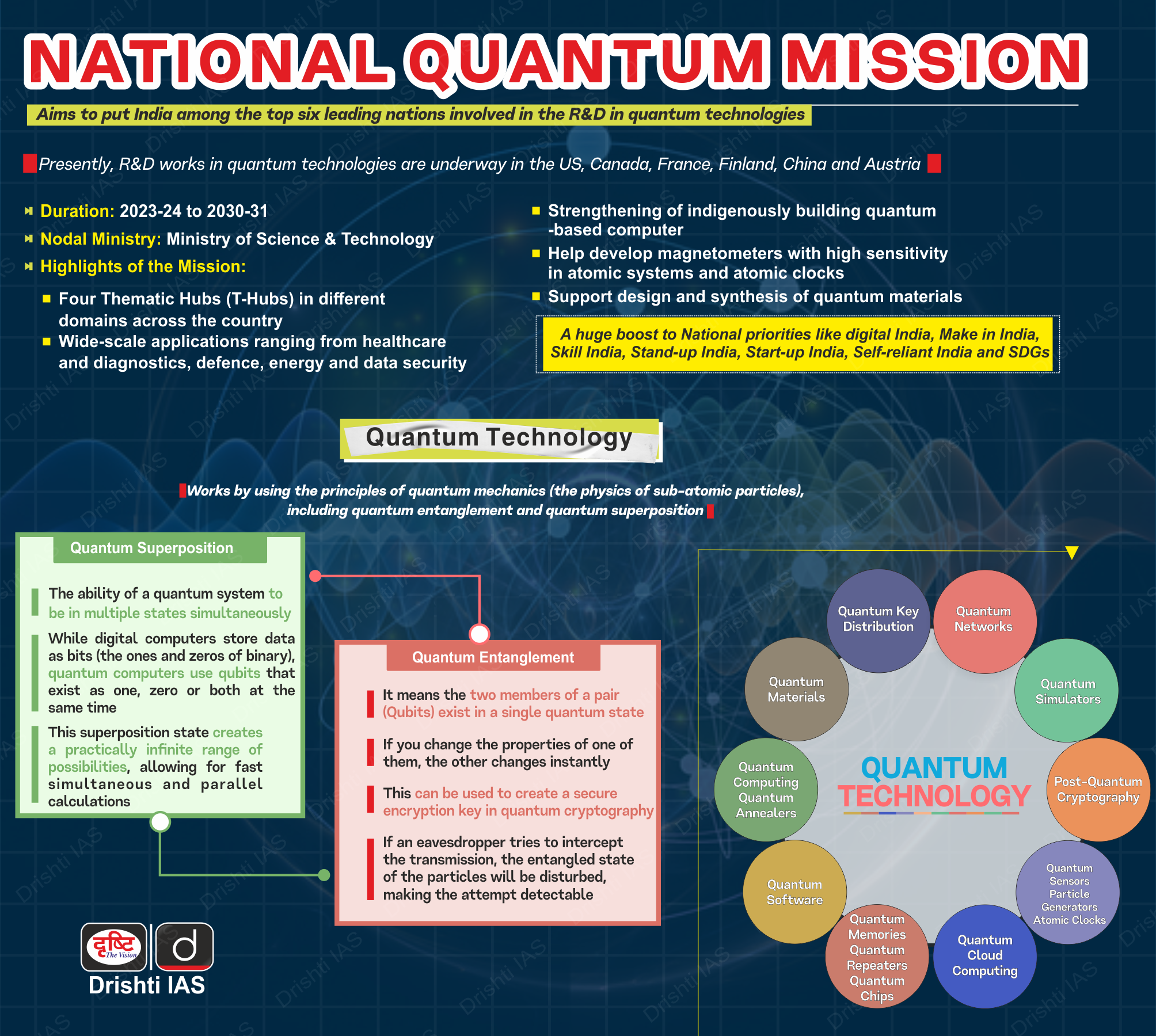
- About: The National Quantum Mission (NQM) was approved by the Union Cabinet in April 2023 and launched in October 2024 to position India as a global leader in quantum science and technology. The mission aims to seed, nurture, and scale up scientific and industrial R&D in quantum technologies.
- Implemented by the Department of Science and Technology (DST), the mission has a total budget outlay of Rs 6,003 crore for a period of eight years (2023-24 to 2030-31).
- Key Objectives and Targets
- Quantum Computing: Developing intermediate-scale quantum computers with 50 to 1,000 physical qubits using various platforms like superconducting and photonic technology.
- Quantum Communication: Establishing satellite-based secure quantum communications between ground stations over a range of 2,000 kilometres within India, as well as with other countries.
- Developing inter-city Quantum Key Distribution (QKD) networks over 2,000 km using existing optical fibres.
- Quantum Sensing and Metrology: Developing highly sensitive magnetometers and atomic clocks for precision timing, communication, and navigation (crucial for GPS, defence, and aviation).
- Quantum Materials and Devices: Supporting the design and synthesis of advanced quantum materials, such as superconductors, novel semiconductors, and topological materials, for the fabrication of quantum devices.
- Institutional Framework: To build research infrastructure and execute these goals, the mission has established four dedicated Thematic Hubs (T-Hubs) in top academic institutions:
- Support for Startups and Deep-Tech: The NQM actively funds and incubates deep-tech startups working on quantum-safe cybersecurity, biosensors, photon sensing, and atomic memory.
- Currently, the mission supports 17 deep-tech ventures (including companies like QNu Labs, which helped achieve the 1,000-km communication milestone).
- The government is utilizing new financial instruments like Optionally Convertible Debt (OCD). This supports startups with capital without forcing immediate equity dilution, helping attract private investment alongside public funds.
- Strategic Significance of Quantum Technology:
- Global Standing: Currently, only a handful of nations (like the US, China, Canada, Austria, Finland, and France) are aggressively developing quantum tech.
- The NQM aims to give India a "quantum jump" to catch up and compete with these countries.
- National Security: Quantum tech, especially Quantum Key Distribution (QKD), provides virtually unhackable communication, which is vital for defence, financial systems, and critical national infrastructure.
- Economic Growth: It supports the "Aatmanirbhar Bharat" (Self-Reliant India) initiative by reducing reliance on imported technologies and patents, fostering home-grown innovation in critical future technologies.
- Global Standing: Currently, only a handful of nations (like the US, China, Canada, Austria, Finland, and France) are aggressively developing quantum tech.
Frequently Asked Questions (FAQs)
1. What is the National Quantum Mission (NQM)?
It is a government initiative (2023) to develop quantum technologies with a budget of ₹6,003 crore over 8 years.
2. What is Quantum Key Distribution (QKD)?
It is a secure communication method using quantum mechanics, enabling virtually unhackable data transmission.
3. What is the significance of the 1,000-km quantum network?
It enhances secure communication in defence, finance, and critical infrastructure while showcasing indigenous capability.
4. What are the key objectives of NQM?
Developing quantum computers, secure communication networks, quantum sensors, and advanced quantum materials.
5. How does NQM support startups?
It funds deep-tech ventures and uses instruments like Optionally Convertible Debt to promote innovation and investment.
UPSC Civil Services Examination Previous Year Question (PYQ)
Prelims
Q. Which one of the following is the context in which the term "qubit" is mentioned?
(a) Cloud Services
(b) Quantum Computing
(c) Visible Light Communication Technologies
(d) Wireless Communication Technologies
Ans: (b)
Mains
Q. “The emergence of the Fourth Industrial Revolution (Digital Revolution) has initiated e-Governance as an integral part of government”. Discuss. (2020)
Jallianwala Bagh Massacre 1919
Why in News?
On 13th April 2026, the nation paid homage to the martyrs of the Jallianwala Bagh massacre, marking the 107th anniversary of one of the darkest chapters in India’s colonial history.
What was the Jallianwala Bagh Massacre?
- Background: The Rowlatt Act, 1919 (formally known as the Anarchical and Revolutionary Crimes Act, 1919) was passed based on the Sedition Committee's recommendations.
- It authorized the British colonial government to imprison suspected political subversives without trial for up to two years.
- In response to the Rowlatt Act (1919), Mahatma Gandhi organized a nationwide hartal on 6th April 1919, marking the first all-India mass protest. He strongly opposed the Act, calling it a “Black Law,” and the day came to be known as Black Day.
- Tensions were particularly volatile in Punjab. On 9th April two prominent local nationalist leaders Dr. Saifuddin Kitchlew and Dr. Satyapal were secretly arrested and deported for organizing peaceful protests.
- The public anger led to riots in Amritsar. The British administration handed control of the city to Brigadier General Reginald Edward Harry Dyer, who practically imposed martial law, banning all public gatherings.
- Day of the Massacre: 13th April 1919 coincided with Baisakhi, a major harvest festival. Thousands of men, women, and children gathered in Jallianwala Bagh, an enclosed public ground in Amritsar.
- Many were villagers unaware of Dyer’s ban on public assemblies, while a smaller contingent was there to peacefully protest the arrest of their leaders.
- General Dyer arrived with a detachment of Gurkha and Baloch. He deliberately blocked the main, narrow entrance with his forces and armored vehicles.
- Without issuing any warning to disperse, Dyer ordered his troops to open fire on the dense, unarmed crowd. Over 1,000 men, women, and children were killed.
- Hunter Commission (Disorders Inquiry Committee): Appointed in 1919 to investigate the massacre.
- While it censured Dyer for his actions and forced his resignation from the military, it recommended no penal or legal action against him.
- INC Inquiry: The Congress boycotted the Hunter Commission and set up its own non-official committee, comprising leaders like Mahatma Gandhi, Motilal Nehru, C.R. Das, and Abbas Tyabji, which condemned the act as a calculated piece of inhumanity.
- Aftermath:
- High-Profile Renunciations: In profound protest, Rabindranath Tagore renounced his British Knighthood, and Mahatma Gandhi returned his Kaiser-i-Hind medal.
- Sir Chettur Sankaran Nair was a prominent Indian nationalist, jurist, and social reformer. He served on the Viceroy’s Executive Council and contributed to the Montagu–Chelmsford Reforms (1919). Following the Jallianwala Bagh massacre, he resigned in protest and, in his book Gandhi and Anarchy (1922), held Michael O’Dwyer responsible, leading to a defamation case in London.
- Although the verdict went against him, his stand exposed colonial bias and strengthened nationalist sentiment.
- Sir Chettur Sankaran Nair was a prominent Indian nationalist, jurist, and social reformer. He served on the Viceroy’s Executive Council and contributed to the Montagu–Chelmsford Reforms (1919). Following the Jallianwala Bagh massacre, he resigned in protest and, in his book Gandhi and Anarchy (1922), held Michael O’Dwyer responsible, leading to a defamation case in London.
- Catalyst for Mass Movements: The outrage over Punjab, merged with the Khilafat issue, provided the immediate political capital for Gandhi to launch the Non-Cooperation Movement (1920–1922).
- Rise of Revolutionary Extremism: The trauma deeply influenced a younger generation in Northern India, including Bhagat Singh, accelerating the shift toward militant anti-imperialism via organizations like the Hindustan Socialist Republican Association (HSRA).
- Historical Retribution: In 1940, Udham Singh (a survivor of the massacre) assassinated Michael O'Dwyer in London. O'Dwyer was the Lieutenant Governor of Punjab in 1919, who had officially endorsed Dyer's actions.
- High-Profile Renunciations: In profound protest, Rabindranath Tagore renounced his British Knighthood, and Mahatma Gandhi returned his Kaiser-i-Hind medal.
Frequently Asked Questions (FAQs)
1. What was the Rowlatt Act, 1919?
It allowed detention without trial for up to two years, curbing civil liberties and triggering widespread protests.
2. Why did the Jallianwala Bagh massacre occur?
It resulted from protests against the Rowlatt Act and British repression in Punjab under General Dyer.
3. What was the role of the Hunter Commission?
It investigated the massacre, criticized Dyer but recommended no strict punishment, exposing colonial bias.
4. How did the massacre impact India’s freedom struggle?
It led to mass outrage, inspired the Non-Cooperation Movement, and strengthened revolutionary nationalism.
5. Who was Udham Singh and what did he do?
A survivor of the massacre, he assassinated Michael O’Dwyer in 1940 as an act of retribution.
UPSC Civil Services Examination, Previous Year Questions (PYQs)
Q. During the Indian Freedom Struggle, why did Rowlatt Act arouse popular indignation? (2009)
(a) It curtailed the freedom of religion
(b) It suppressed the Indian traditional education
(c) It authorized the government to imprison people without trial
(d) It curbed the trade union activities
Ans: (c)
Q 2. Who among the following is associated with ‘Songs from Prison’, a translation of ancient Indian religious lyrics in English? (2021)
(a) Bal Gangadhar Tilak
(b) Jawaharlal Nehru
(c) Mohandas Karamchand Gandhi
(d) Sarojini Naidu
Ans: (c)
Q3. With reference to the British colonial rule in India, consider the following statements: (2019)
- Mahatma Gandhi was instrumental in the abolition of the system of ‘indentured labour’.
- In Lord Chelmsford’s ‘War Conference’, Mahatma Gandhi did not support the resolution on recruiting Indians for World War.
- Consequent upon the breaking of Salt Law by Indian people, the Indian National Congress was declared illegal by the colonial rulers.
Which of the statements given above are correct?
(a) 1 and 2 only
(b) 1 and 3 only
(c) 2 and 3 only
(d) 1, 2 and 3
Ans: (b)
Mains
Q1. Bring out the constructive programmes of Mahatma Gandhi during Non-Cooperation Movement and Civil Disobedience Movement. (2021)
7th Edition of Exercise DUSTLIK
The Indian Armed Forces is set to participate in the 7th edition of the India-Uzbekistan joint military exercise, DUSTLIK, in Namangan, Uzbekistan, aimed at enhancing bilateral military cooperation and operational synergy.
- Exercise DUSTLIK: The exercise, first held in 2019, is an annual bilateral event conducted alternately in India and Uzbekistan.
- 7th edition features Tri-services integration training alongside personnel from the Uzbekistan Armed Forces.
- Primary Objective: The exercise aims to strengthen defence cooperation and enhance joint operational capabilities in semi-mountainous terrain.
- It focuses on developing a unified command-and-control framework through joint tactical drills, strike missions, and land navigation exercises, culminating in special operations for the neutralisation of unlawful armed groups.
Uzbekistan
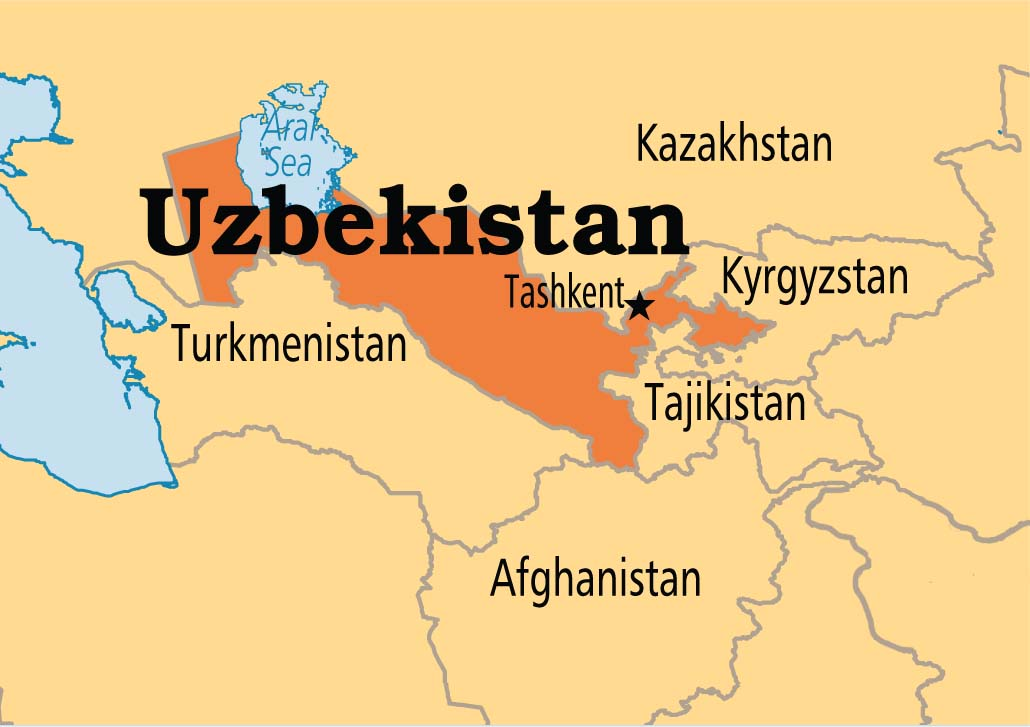
- Location: Uzbekistan is a landlocked country in Central Asia, bordered by Kazakhstan (north), Kyrgyzstan (northeast), Tajikistan (southeast), Afghanistan (south), and Turkmenistan (southwest).
- Physical Features: The country is largely arid, with most of its area covered by the Kyzylkum Desert and the Turan Plain.
- Mountain ranges such as the Tien Shan, Gissar, and Alay lie in the east, while fertile regions like the Fergana Valley and Zeravshan Valley support agriculture and historic cities like Samarkand and Bukhara.
- Key Significance: It is a doubly landlocked country (surrounded only by landlocked countries); the only other such country is Liechtenstein.
- Uzbekistan holds strategic importance in Central Asia, includes the autonomous region of Karakalpakstan, and plays a key role in regional geopolitics and India’s engagement with Central Asia.
| Read more: India and Uzbekistan Signed BIT |
China’s Cenling County and India’s Objection
India has firmly rejected China’s attempts to assign “fictitious names” to places within its territory, especially in Arunachal Pradesh, asserting that such actions are baseless and unacceptable.
- The Ministry of External Affairs reiterated that these regions will always remain an integral part of India, while also stating that such actions undermine efforts to stabilise and normalise bilateral relations.
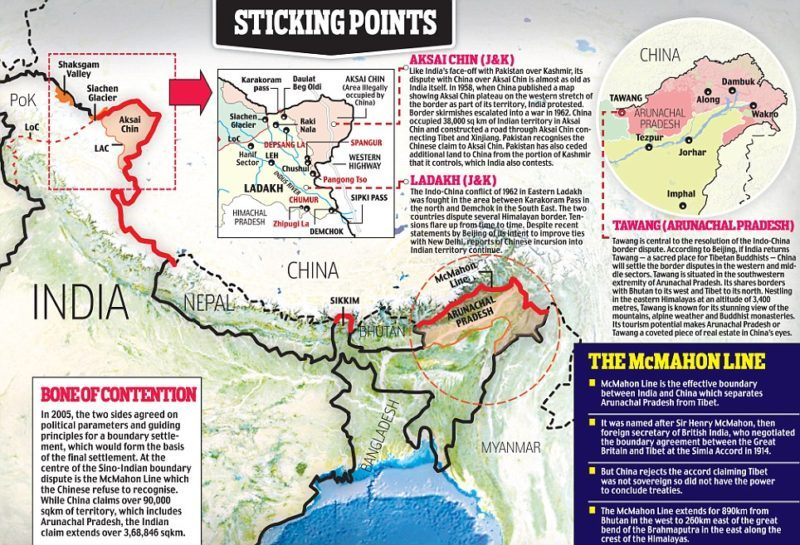
- Background: China has recently established a new county named “Cenling” in Xinjiang. It lies near the tri-junction region adjoining Afghanistan, Pakistan-occupied Kashmir, and India’s Arunachal Pradesh, close to the Karakoram range.
- It will be administered under the Kashgar prefecture, a strategic region on the ancient Silk Road and a key gateway for the China-Pakistan Economic Corridor (CPEC), which passes through PoK and is opposed by India.
- Pattern: This development reflects a continuing pattern, as China has created multiple such administrative units in recent years, including Hean and Hekang, against which India has formally protested.
- China’s Claim: China’s claims are rooted in its rejection of the boundary defined under the Simla Convention and the associated McMahon Line.
- It further justifies its position by citing historical and cultural linkages between Tawang monasteries and Lhasa.
- Objective: Renaming places and creating administrative units are seen as strategic tools used by China to reinforce territorial claims and exert pressure on India.
- Strategic Significance: This approach reflects a broader geopolitical pattern, similar to China’s conduct in the South China Sea, where symbolic actions are combined with economic and military strength to assert sovereignty.
| Read more: India Rejects China’s Claim Over Arunachal Pradesh |
Emperor Penguin as a Sentinel Species
Recently, the International Union for Conservation of Nature declared the Emperor Penguin an endangered species, which also serves as a sentinel species for climate change impacts in Antarctica.
- Emperor Penguins are the largest and heaviest penguin species, distinguished by a golden-orange streak on their neck and chest.
- They are highly dependent on sea ice for survival, using it for living, hunting and breeding, making them vulnerable to climate change.
- Due to global warming, emperor penguin populations are projected to decline significantly, with estimates suggesting up to a 50% reduction by the 2080s.
Sentinel Species
- About: Sentinel species are organisms whose health reflects the condition of the ecosystem, providing early warning signs of environmental degradation.
- The use of canaries in coal mines historically demonstrated the sentinel principle, as they reacted faster to carbon monoxide than humans.
- Function: These species often occupy fixed habitats, live long enough to accumulate toxins, and possess biological traits that amplify environmental impacts.
- They respond quickly and visibly to environmental stressors such as pollution, disease, and climate change.
- Examples: Frogs (sensitive due to permeable skin), honeybees (track agricultural chemicals), polar bears (indicate Arctic contamination), and certain fish species (detect industrial runoff) act as sentinel species, with their decline signalling broader ecological stress.
| Read more: IUCN Red List - Drishti IAS |