
NDMA Guidelines for Disaster Victim Identification
Why in News?
The National Disaster Management Authority (NDMA) has released India’s first-ever national guidelines and Standard Operating Procedures (SOPs) for Disaster Victim Identification (DVI) to ensure scientific identification and dignified handover of human remains during mass fatality incidents.
- Titled “National Disaster Management Guidelines on Comprehensive Disaster Victim Identification and Management”, the document was released, marking 25 years since the 2001 Gujarat earthquake.
What are the Key Provisions of NDMA Guidelines on Disaster Victim Identification?
- Need for DVI Guidelines: The guidelines became urgent after a series of major disasters including the Air India crash (Ahmedabad), the Sangareddy chemical factory explosion (Telangana), flash floods (Uttarakhand), and the Delhi's car bomb blast near Red Fort where victim identification proved difficult.
- The absence of Standard Operating Procedures (SOPs), shortage of trained manpower and infrastructure, and limitations of traditional identification methods highlighted the need for advanced forensic techniques.
- Most importantly, the guidelines address the humanitarian and legal imperative of ensuring dignity of the dead, timely legal closure, and emotional closure for affected families.
Key Provisions of NDMA DVI Guidelines
- "Four-Stage" Identification Process: The guidelines mandate a systematic, four-step protocol for identification to ensure accuracy and prevent mix-ups:
- Systematic Recovery: Careful retrieval of human remains from the disaster site.
- Post-Mortem Data Collection: Gathering data (fingerprints, DNA, dental, physical markers) from the recovered remains.
- Ante-Mortem Data Collection: Collecting medical records, dental history, and physical descriptions from the victims' families.
- Reconciliation: Scientifically matching the post-mortem data with ante-mortem records to confirm identity before releasing the body.
- National Dental Data Registry: A major recommendation is the creation of a dental registry, allowing authorities to use teeth and jaws (which are highly durable) to identify victims when other methods fail.
- Forensic Archaeology and Odontology: The guidelines incorporate forensic archaeology to identify human remains even months or years after a disaster, and strengthen forensic odontology by using dental records as a key tool for accurate victim identification.
- No Mass Autopsies: In mass fatality events, the guidelines advise against conducting physical autopsies on all victims.
- Cultural Sensitivity: The process must respect the community customs of the victims and include emotional support and counseling for families.
- Implementation: The NDMA has laid out a robust plan to operationalise the guidelines nationwide by establishing specialised state-level forensic teams to handle disaster victim identification.
- It also emphasises targeted training of experts from relevant forensic fields to manage complex scenarios, such as landslides where passenger manifests or records are unavailable.
Significance
- The guidelines draw from INTERPOL’s Disaster Victim Identification (DVI) standards, suitably adapted to Indian conditions.
- The guidelines strengthen disaster governance and institutional preparedness, uphold the dignity and rights of victims’ families, and integrate science, technology, and ethics into disaster response.
- They also address India-specific challenges arising from climate-induced disasters, urban accidents, and industrial hazards.
What are the Challenges in Disaster Victim Identification?
- Decomposition: In India's high-humidity and hot climate, bodies decompose rapidly, making visual identification impossible within hours.
- State of Remains: Disasters often result in bodies being charred (fire incidents), fragmented (explosions), or mingled (mass casualty events), complicating the separation and identification process.
- Displacement: In events like floods or landslides, bodies can be displaced miles away from the incident site or buried deep under debris, making recovery difficult.
- Infrastructure Gaps: There is a severe shortage of mortuary spaces, cold chain transport, and storage facilities to preserve bodies for identification.
- Coordination Issues: Disaster sites often see hundreds of personnel from multiple agencies (local, state, central) without a unified command for victim management, leading to chaos.
- Lack of Data: The absence of a centralized database (like dental records) makes it difficult to match unidentified bodies with missing persons.
What Measures Can Strengthen Disaster Victim Identification?
- "Pre-Disaster" Public Data Repository: Linking the Ayushman Bharat Health Account (ABHA) with optional biometric markers (like high-resolution dental scans or surgical implant serial numbers) would make the proposed "Dental Registry" effective in real-time.
- Integration of "Digital Forensics": The guidelines can be strengthened by leveraging digital footprints such as smartwatches, mobile phones, and cloud-based health data (heart-rate patterns, step counts, biometric locks) for rapid preliminary identification.
- Biometric locks from these devices can act as a rapid primary identifier before forensic teams arrive.
- Additionally, AI-based facial reconstruction from damaged skulls or partial remains offers a faster and more objective alternative to traditional forensic clay modelling.
- Portable DNA Labs: Currently, samples are sent to central labs, causing delays. Deploying Rapid DNA machines (rugged, portable units used by military/police globally) that can generate a DNA profile in 90 minutes directly at the disaster site would drastically reduce the wait time for families.
- Tamper-Proof Records: In mass casualty events, samples pass through many hands (police, transport, lab, storage).
- Implementing a Blockchain-based ledger for the "Chain of Custody" ensures that the data regarding human remains is immutable, transparent, and legally admissible, preventing any accusations of tampering or negligence.
- International DVI Diplomacy: Establishing pre-signed DVI treaties with neighboring countries and major tourism partners would allow for the instant sharing of biometric data and DNA profiles without bureaucratic delays.
Conclusion
The NDMA’s DVI guidelines mark a historic paradigm shift towards a scientifically robust and humanitarian framework, ensuring the "dignity of the dead" through standardized protocols like the National Dental Data Registry. By integrating advanced forensics with a rights-based approach, India secures institutional preparedness while guaranteeing essential legal and emotional closure for affected families.
|
Drishti Mains Question: Examine the significance of NDMA’s Disaster Victim Identification (DVI) guidelines in strengthening India’s disaster governance framework. |
Frequently Asked Questions (FAQs)
1. What is Disaster Victim Identification (DVI)?
DVI is a scientific process to establish the identity of deceased persons in mass fatality incidents using forensic methods such as DNA, dental records, and fingerprints.
2. Why were NDMA’s DVI guidelines required?
Recent disasters exposed lack of SOPs, weak infrastructure, and limits of visual identification, making scientific and standardised protocols essential.
3. What is the four-stage identification process prescribed by NDMA?
It includes systematic recovery, post-mortem data collection, ante-mortem data collection, and reconciliation for confirmed identification.
4. Why is a National Dental Data Registry important?
Teeth and jaws are highly durable, making dental records crucial when bodies are decomposed, charred, or fragmented.
5. How are the NDMA guidelines aligned with global standards?
They draw from INTERPOL’s DVI standards and align with the Sendai Framework for Disaster Risk Reduction, ensuring global best practices adapted to Indian conditions.
UPSC Civil Services Examination Previous Year Question (PYQ)
Mains:
Q. Discuss the recent measures initiated in disaster management by the Government of India departing from the earlier reactive approach. (2020)
Q. Vulnerability is an essential element for defining disaster impacts and its threat to people. How and in what ways can vulnerability to disasters be characterized? Discuss different types of vulnerability with reference to disasters. (2019)
Q. Describe various measures taken in India for Disaster Risk Reduction (DRR) before and after signing ‘Sendai Framework for DRR (2015-30)’. How is this framework different from ‘Hyogo Framework for Action, 2005’? (2018)
Circular Economy in Mobility
For Prelims: Circular Economy, NITI Aayog, End-of-Life Vehicles, E-waste, Extended Producer Responsibility
For Mains: Circular Economy as a Tool for Sustainable Development, Waste Management Challenges in Urbanising India, Critical Minerals, Energy Transition, and Resource Security
Why in News?
NITI Aayog launched three thematic reports on Enhancing Circular Economy in End-of-Life Vehicles (ELVs), Waste Tyres, E-waste, and Lithium-ion Batteries at the International Material Recycling Conference (IMRC) organised by the Material Recycling Association of India (MRAI) in Jaipur.
- The reports outline challenges and policy pathways to strengthen India’s circular economy ecosystem.
Summary
- NITI Aayog’s reports highlight that rapid urbanisation, EV growth, and digitalisation are sharply increasing ELVs, waste tyres, E-waste, and lithium-ion battery waste, exposing gaps in formal recycling, standards, and Extended Producer Responsibility (EPR) enforcement.
- Adopting a strong circular economy framework—through infrastructure expansion, formalisation of informal recyclers, stronger EPR, and high-value recycling—can turn India’s waste crisis into a source of resource security, green jobs, and climate resilience.
What are the Key Highlights of the NITI Aayog Reports on Circular Economy in the Mobility?
End-of-Life Vehicles (ELVs)
- Rapid urbanisation and rising vehicle ownership, including the surge in electric vehicles, are accelerating the generation of ageing vehicles in India.
- Electric Vehicles (EV) sales increased from 50,000 in 2016 to 2.08 million in 2024, with the government targeting 30% EV share in total vehicle sales by 2030, increasing future ELV volumes.
- The number of End-of-Life Vehicles is projected to rise from 23 million in 2025 to 50 million by 2030, intensifying environmental and material recovery challenges.
- Limited availability of Automated Testing Stations (ATS) and Registered Vehicle Scrapping Facilities (RVSFs) constrains formal scrappage and circular economy outcomes.
- Weak financial viability of formal scrappage units, procedural delays, and low consumer awareness sustain informal dismantling practices.
Circular Economy of Waste Tyres in India
- Growth in vehicle ownership and EV adoption is driving higher tyre consumption, leading to a sharp increase in End-of-Life Tyres (ELTs).
- The tyre recycling ecosystem remains fragmented, with poor traceability, lack of standards, and dominance of informal recyclers.
- High-value recycling pathways such as recovered Carbon Black (rCB) and tyre retreading remain underutilised due to weak standards and market mandates.
- Downcycling of tyre waste leads to missed opportunities for import substitution and green job creation.
E-waste and Lithium-Ion Batteries in India
- Digitalisation and the clean energy transition are rapidly increasing E-waste and Lithium-ion battery waste in India.
- E-waste generation is expected to rise from 6.19 MMT (million metric ton) in 2024 to 14 MMT by 2030, significantly increasing recycling and environmental management pressures.
- Demand for Lithium-ion batteries is projected to grow from 29 GWh in 2025 to 248 GWh by 2035, driven by EV adoption and energy storage needs.
- Informal recycling using unsafe methods dominates the sector, causing pollution, health risks, and economic losses.
- Extended Producer Responsibility (EPR) for E-waste covers only a few metals, while weak monitoring allows fake recyclers and fraudulent certifications.
- Inefficient recycling deepens India’s dependence on imported critical minerals, affecting long-term energy security.
What is Circular Economy?
- About: The Circular Economy refers to an economic model whose objective is to produce goods and services in a sustainable way, by limiting the consumption and waste of resources (raw materials, water, energy) as well as the production of waste.
- Unlike the linear economy (take–make–dispose), the circular economy includes 6 R’s - Reduce, Reuse, Recycle, Refurbishment, Recover, and Repairing of materials.
Importance of Circular Economy for India
- Resource Constraint: India has 18% of the global population but only ~7% mineral resources and ~4% freshwater, making a linear, extraction-led growth model economically unsustainable.
- Linear consumption increases dependence on imported metals, fossil fuels, and construction materials, while circular economy substitutes virgin imports with domestic secondary materials.
- Exploding Waste Generation: India generates ~1.68 lakh tonnes of municipal solid waste per day, projected to reach 436 million tonnes annually by 2050, showing growth is directly translating into waste without circular intervention.
- Residual Waste Dominance: Only about 55–60% of waste is processed, while the rest becomes residual waste that is landfilled or dumped, permanently destroying recoverable material value.
- India has over 2,100 dumpsites, locking over 10,000 hectares of urban land, which circular processing can reclaim for housing and infrastructure.
- Climate impact: GHG emissions from municipal solid waste are projected to reach ~41 million tonnes CO₂-equivalent by 2030, mainly due to landfill methane.
- Circular economies can mitigate this by reducing emissions at both the source and disposal stages.
- Construction Sector Pressure: India’s infrastructure boom generates massive Construction and Demolition (C&D)waste, of which ~95% is recyclable, yet poor circularity increases sand mining, cement emissions, and ecological damage.
- Water stress: Urban India sewage generation is projected to rise to 1.2 lakh millions of liters per day (MLD) by 2050, circular reuse of treated wastewater reduces freshwater withdrawals.
- Employment potential: Circular activities like recycling and bio-methanation can generate over 1 crore man-days of employment, unlike capital-intensive extractive industries.
India’s Initiatives Supporting Circular Economy
- Swachh Bharat Mission (Urban & Gramin).
- Solid Waste Management Rules, 2026.
- Plastic Waste Management (Amendment) Rules, 2022.
- Ban on Single-Use Plastics.
- Swachh Survekshan.
- e-Waste Management Rules 2022.
- Mission LiFE.
- India is a key member of the Global Alliance on Circular Economy and Resource Efficiency (GACERE), which aims to foster a global transition to circular economic practices.
What Measures are Needed to Strengthen the Circular Economy in Mobility?
End-of-Life Vehicles (ELVs)
- Expand ATS and RVSFs on a time-bound basis, including PSU-led models with private operations to ensure nationwide coverage.
- Link vehicle deregistration strictly to a valid Certificate of Deposit (CoD), supported by Aadhaar-based ownership transfer and automated penalties to prevent leakages.
- Formalise informal dismantlers through phased integration, technical assistance, and a one-time waiver of legacy environmental liabilities to encourage compliance.
Circular Economy of Waste Tyres
- Restrict Tyre Pyrolysis Oil (TPO) use to refineries or approved industrial applications and mandate conversion of carbon char only into recovered Carbon Black (rCB).
- Notify national standards for TPO and rCB and issue guidelines for their use in value-added applications to prevent downcycling.
- Formalise informal recyclers via Udyam Assist, offer targeted financial support, one-time liability waivers, and rationalise GST and Harmonized System of Nomenclature (HSN) codes for recycled tyre products.
E-waste and Lithium-Ion Batteries
- Expand EPR coverage to include additional high-value and critical minerals beyond current metals to encourage investment in advanced recycling.
- Notify chemistry-wise metal composition for Lithium-ion batteries and update BIS standards (IS 16046) to mandate composition testing and purity benchmarks.
- Issue detailed guidelines for collection, storage, transport, refurbishment, and recycling of waste batteries and E-waste.
- Create shared recycling facilities with modern technology, formally train and recognise informal recyclers, and increase waste collection through city-led PPP systems ULB-led PPPs.
Conclusion
The NITI Aayog reports collectively stress India’s waste crisis is no longer just a sanitation issue—it is a resource, climate, urban governance, and economic challenge. By embracing a circular economy approach, residual waste can be transformed from an environmental liability into a driver of sustainable growth, green jobs, and climate resilience, aligning India’s development pathway with its SDG commitments.
|
Drishti Mains Question: India’s waste problem is not merely a sanitation issue but an economic and governance challenge. Discuss. |
Frequently Asked Questions (FAQs)
1. What is meant by a circular economy?
A circular economy minimises waste and resource use by following the 6Rs—Reduce, Reuse, Recycle, Refurbish, Recover, and Repair, unlike the linear take–make–dispose model.
2. Why are End-of-Life Vehicles (ELVs) a growing concern in India?
Rapid urbanisation and rising vehicle ownership, including EVs, are projected to increase ELVs from 23 million in 2025 to 50 million by 2030, straining recycling systems.
3. What are the key challenges in India’s waste tyre recycling ecosystem?
The sector suffers from informality, poor traceability, lack of standards, and underutilisation of high-value products like recovered Carbon Black (rCB).
4. Why are E-waste and lithium-ion battery recycling critical for India?
Inefficient recycling increases pollution, health risks, and dependence on imported critical minerals, affecting long-term energy security.
5. What key measures has NITI Aayog suggested to strengthen the circular economy in mobility?
Recommendations include expanding scrappage infrastructure, strengthening EPR, formalising informal recyclers, improving standards, and creating shared recycling facilities
UPSC Civil Services Examination, Previous Year Questions (PYQs)
Prelims
Q. Consider the following statements: ( 2025)
Statement I: Circular economy reduces the emissions of greenhouse gases.
Statement II: Circular economy reduces the use of raw materials as inputs.
Statement III: Circular economy reduces wastage in the production process.
Which one of the following is correct in respect of the above statements?
(a) Both Statement II and Statement III are correct and both of them explain Statement I
(b) Both Statement II and Statement III are correct but only one of them explains Statement I
(c) Only one of the Statements II and III is correct and that explains Statement I
(d) Neither Statement II nor Statement III is correct
Ans: (a)
Q. In India, ‘extend producer responsibility’ was introduced as an important feature in which of the following?(2019)
(a) The Bio-medical Waste (Management and Handling) Rules, 1998
(b) The Recycled Plastic (Manufacturing and Usage) Rules, 1999
(c) The e-Waste (Management and Handling) Rules, 2011
(d) The Food Safety and Standard Regulations, 2011
Ans: (c)
DRDO Successfully Demonstrates SFDR Technology
Why in News?
The Defence Research and Development Organisation (DRDO) has successfully carried out a flight demonstration of Solid Fuel Ducted Ramjet (SFDR) technology from the Integrated Test Range (ITR), Chandipur, Odisha.
- With this successful test, India joins an elite group of nations possessing SFDR technology, which is critical for developing long-range air-to-air missiles.
What is Solid Fuel Ducted Ramjet (SFDR) Technology?
- SFDR: It is a cutting-edge missile propulsion technology. Unlike conventional rockets that carry both fuel and oxidiser, SFDR is an "air-breathing" engine that uses atmospheric oxygen to burn solid fuel, allowing for sustained supersonic speeds and extended ranges.
- Working of SFDR:
- Nozzle-less Booster: This component accelerates the missile to supersonic speeds within three seconds, a prerequisite for the ramjet to function.
- Ducted Ramjet Sustainer: Once at speed, a boron-based solid fuel ignites. It draws oxygen from the atmosphere (saving weight by not carrying an oxidizer) to fuel combustion, allowing powered flight for 50 to 200 seconds.
- Hot Gas Valve: Developed using carbon-carbon composites and tungsten-copper alloys, this valve regulates combustion gases based on altitude and speed.
- Cheek-Mounted Air Intakes: These efficiently compress incoming air to ensure sustained combustion during flight.
- Key Performance Metrics:
- Altitude Flexibility: The missile can operate from sea level up to an altitude of 20 km.
- High Manoeuvrability: It is capable of executing vertical manoeuvres of up to 10 km.
- Precision Targeting: Integrated with radio-frequency seekers, inertial navigation, and jam-resistant data links to ensure high accuracy.
- Sustained Supersonic Speeds: Unlike standard solid-fuel rockets that burn out quickly, SFDR sustain speeds between Mach 2 and Mach 3.8 for longer durations.
- Extended Range: It enables fighter jets to engage targets far beyond visual range, with an operational range between 50 km and 340 km.
- Lethality: It is designed to carry a fragmentation warhead with a proximity fuse to maximize damage against fast-moving aerial targets.
- Significance:
- Larger No-Escape Zone: By maintaining speed and energy until the terminal phase, it creates a wider "no-escape zone," making it significantly harder for enemy aircraft to evade.
- Operational Versatility: The technology can be adapted for both air-to-air and surface-to-air missile systems, enhancing broader air defence capabilities.
- Strategic Boost: This technology is the backbone of India’s upcoming Astra Mk-3, a Beyond Visual Range Air-to-Air Missile (BVRAAM) intended to rival the European Meteor missile and the Chinese PL-15.
- Tactical Edge: It provides the Indian Air Force (IAF) with a "First Look, First Kill" capability, allowing them to engage adversaries from safe standoff distances.
Ramjet, SFDR, and Scramjet Technologies
|
Feature |
Ramjet |
SFDR (Solid Fuel Ducted Ramjet) |
Scramjet (Supersonic Combustion Ramjet) |
|
Combustion |
Subsonic (Air slows down inside engine) |
Subsonic (Air slows down inside engine) |
Supersonic (Air flows fast inside engine) |
|
Fuel Type |
Liquid Fuel (mostly) |
Solid Fuel (Boron-based) |
Liquid Hydrogen |
|
Oxidizer |
Atmospheric Oxygen |
Atmospheric Oxygen |
Atmospheric Oxygen |
|
Primary Use |
Cruise Missiles (e.g., BrahMos) |
Air-to-Air Missiles (e.g., Astra Mk3) |
Hypersonic Vehicles (e.g., Hypersonic Technology Demonstrator Vehicle (HSTDV)) |
Frequently Asked Questions (FAQs)
1. What is Solid Fuel Ducted Ramjet (SFDR) technology?
SFDR is anair-breathing missile propulsion system that uses atmospheric oxygen to burn solid fuel, enabling sustained supersonic speeds and longer range.
2. Why is SFDR technology important for India?
It enableslong-range air-to-air missiles, improves the no-escape zone, and places India among a select group of advanced missile-capable nations.
3. How is SFDR different from conventional solid rocket motors?
Unlike rockets that burn out quickly,SFDR provides sustained thrust by continuously burning fuel using atmospheric oxygen.
4. Which upcoming missile system will use SFDR technology?
SFDR is thebackbone of Astra Mk-3, a Beyond Visual Range Air-to-Air Missile (BVRAAM) under development by India.
UPSC Civil Services Examination, Previous Year Questions (PYQs)
Q. Consider the following statements:
- Ballistic missiles are jet-propelled at subsonic speeds throughout their flights, while cruise missiles are rocket-powered only in the initial phase of flight.
- Agni-V is a medium-range supersonic cruise missile, while BrahMos is a solid-fuelled intercontinental ballistic missile.
Which of the statements given above is/are correct?
(a) 1 only
(b) 2 only
(c) Both 1 and 2
(d) Neither 1 nor 2
Ans: d
Q. With reference to Agni-IV Missile, which of the following statements is/are correct? (2014)
- It is a surface-to-surface missile.
- It is fuelled by liquid propellant only.
- It can deliver one-tonne nuclear warheads about 7500 km away.
Select the correct answer using the code given below:
(a) 1 only
(b) 2 and 3 only
(c) 1 and 3 only
(d) 1, 2 and 3
Ans: (a)
Ad Hoc Judges Under Article 224A
In a significant step to address judicial pendency, the Supreme Court Collegium has approved the appointment of retired judges as ad hoc judges in the Allahabad High Court.
- The appointments are made under Article 224A of the Constitution of India, which allows retired High Court judges to be appointed temporarily to tackle case pendency.
- Article 224A has been invoked rarely, despite a persistent backlog of cases in High Courts across India.
- Article 224A: Under Article 224A of the Constitution, a retired High Court judge may be requested to sit and act as an ad hoc judge of a High Court, with the prior consent of the President, on a reference made by the Chief Justice of the High Court.
- While acting, such a judge enjoys all the jurisdiction, powers, and privileges of a High Court judge and is entitled to allowances as determined by the President, but is not deemed a permanent judge of that High Court.
- Importantly, no retired judge can be appointed without their consent.
- In 2021, the Supreme Court issued guidelines encouraging the use of Article 224A to address the unprecedented backlog of cases in High Courts.
- Ad hoc Judges to Supreme Court (Article 127): If quorum of Supreme Court judges is not available, Chief Justice of India (CJI) (with President’s consent) can request a High Court judge duly qualified for appointment as a Judge of the Supreme Court to sit and act as an ad hoc judge of the Supreme Court.
- Attendance of Retired Judges at Supreme Court Sittings: Under Article 128 of the Constitution, the CJI, with the prior consent of the President, may request a retired Supreme Court judge or a qualified retired High Court judge to sit and act as a judge of the Supreme Court.
| Read more: Collegium System of Judicial Appointments in India |
Exercise KHANJAR
Recently, the 13th edition of the India-Kyrgyzstan Joint Special Forces Exercise KHANJAR has commenced in Missamari, Assam.
Exercise KHANJAR
- Background: Exercise KHANJAR was initiated in 2011 and is conducted annually, alternately in India and Kyrgyzstan, to enhance interoperability between Special Forces.
- Participating Units: The Indian Army contingent is represented by troops from the Parachute Regiment (Special Forces), while the Kyrgyzstan contingent is represented by the ILBRIS Special Forces Brigade.
- Aim & Focus Areas: Exchange of best practices in counter- terrorism and Special Forces operations, with training in urban and mountainous terrain, including sniping, building intervention, and high-altitude/mountain warfare.
- Significance: Enhances defence ties, addresses international terrorism and extremism, and reinforces commitment to peace, stability and regional security.
Kyrgyzstan
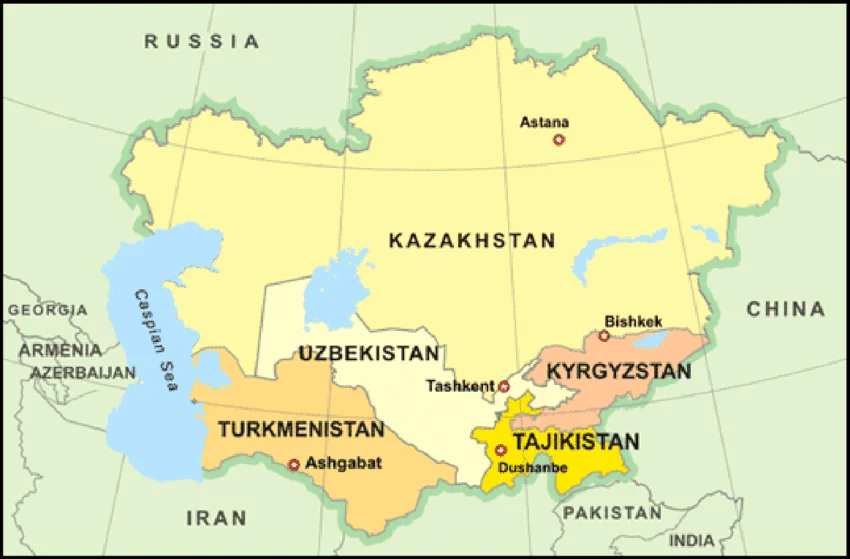
- Kyrgyzstan is a landlocked Central Asian country bordering Kazakhstan, China, Tajikistan and Uzbekistan, with Bishkek as its capital.
- It shares the strategically important Fergana Valley with Uzbekistan and Tajikistan, a region that is highly sensitive from the perspective of regional stability.
- The Fergana Valley is rich in hydrocarbon resources, enhancing its importance for India’s long-term energy security and broader strategic interests in Central Asia.
| Read more: Exercise KHANJAR-XII |
Biomaterials
India is witnessing increasing policy and industrial focus on biomaterials as cleaner material substitutes amid global shifts towards circular economy models, low-carbon manufacturing and fossil-fuel import substitution.
- About: Biomaterials are materials derived wholly or partly from biological sources, or produced using biological processes.
- They are designed to replace or interact with conventional petroleum-based materials across sectors such as packaging, textiles, construction and healthcare.
- Common examples include bioplastics made from plant sugars or starch, bio-based fibres used in textiles, and medical biomaterials such as biodegradable sutures and tissue scaffolds.
- Types: Biomaterials are broadly classified based on their chemical similarity to fossil-based materials and their compatibility with existing manufacturing systems.
- Drop-in Biomaterials: Chemically identical to fossil-based materials and compatible with existing manufacturing systems (e.g., Bio-PET).
- Drop-out Biomaterials: Chemically different from petroleum materials and require new processing, recycling or composting systems (e.g., Polylactic Acid – PLA).
- Novel Biomaterials: Advanced bio-engineered materials offering new properties such as self-healing materials, bio-active implants and advanced composites.
- Significance: Indigenous biomaterials can reduce fossil-based imports, create value from agricultural residues, support climate and circular economy goals, and enhance the global competitiveness of Indian exports.
- India’s biomaterials sector is gaining momentum as a strategic sustainability and industrial opportunity, with the bioplastics market valued at about $500 million in 2024 and strong growth expected.
- Major investments like Balrampur Chini Mills’ PLA plant in Uttar Pradesh and innovations by startups such as Phool.co and Praj Industries highlight domestic progress.
- International Approaches to Biomaterial Adoption: The European Union recognises compostable packaging under its Packaging and Packaging Waste Regulation.
- The United Arab Emirates is developing the world’s largest PLA facility through Emirates Biotech, and the United States promotes biomaterials via the USDA BioPreferred Program.
| Read more: Promoting Circular Economy |
Miniratna Status for Yantra India Limited
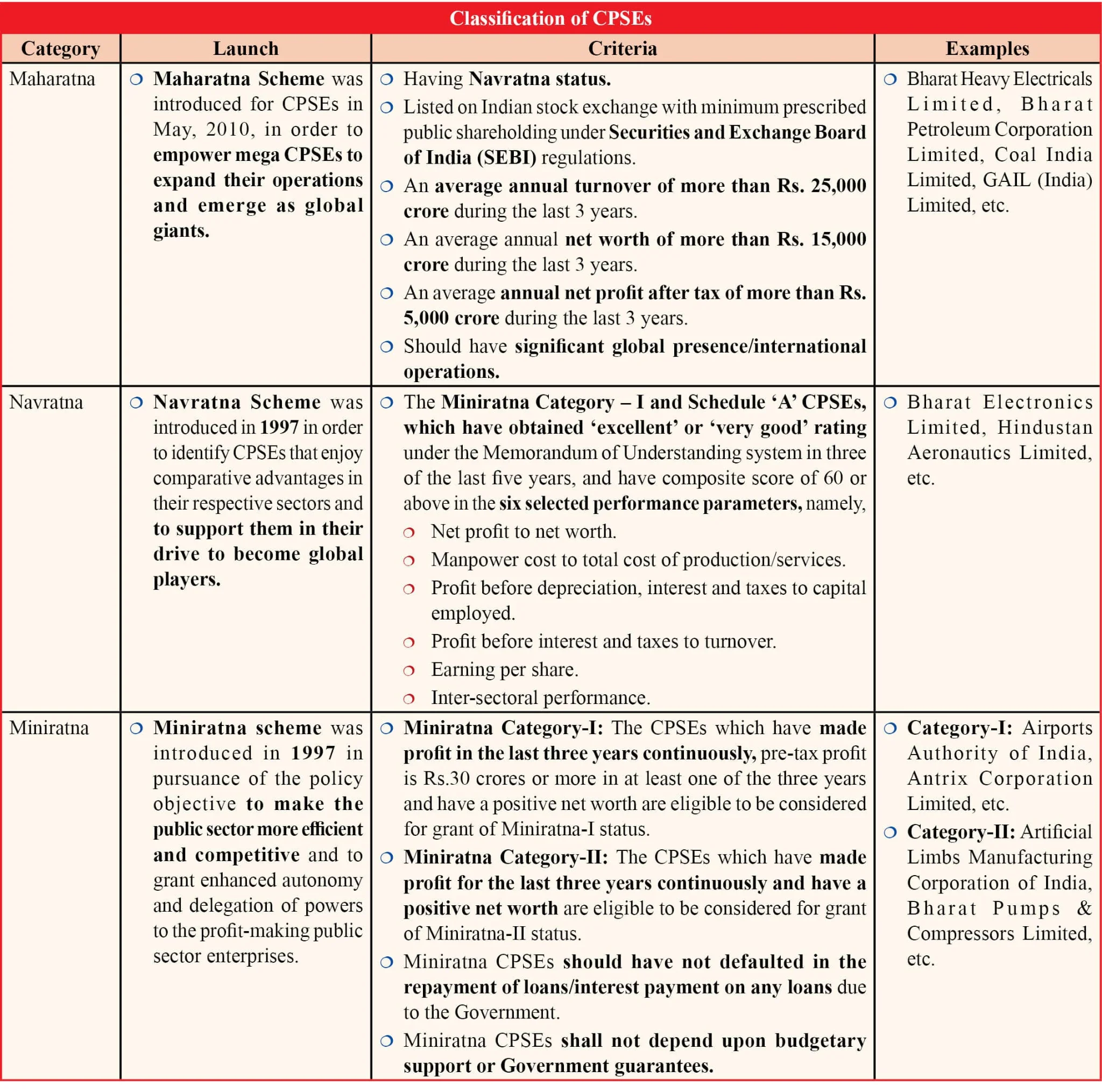
Recently, the Defence Minister granted Miniratna Category-I status to Yantra India Limited, recognising its swift transformation into a profit-making Defence Public Sector Undertakings (DPSUs) within four years.
- About: Yantra India Limited is one of the seven new DPSUs created after the corporatisation of the erstwhile Ordnance Factory Board on 1st October 2021, and functions under the Department of Defence Production.
- Key Products: The company manufactures carbon fibre composites, glass composites, aluminium alloys, and assembly products for medium and large calibre ammunition, armoured vehicles, artillery guns and main battle tanks, placing it in critical defence production segments.
- Significance: The status empowers YIL’s Board to incur capital expenditure up to ₹500 crore on new projects, modernisation and equipment purchase without prior government approval, enabling faster decisions and accelerated expansion.
- Policy Integration: The approval reinforces the Aatmanirbhar Bharat vision by supporting indigenisation, reduced import dependence, higher defence exports, greater industry participation, and India’s emergence as a global defence manufacturing hub.
| Read more: Miniratna Status to 3 DPSUs |
Sampoornata Abhiyan 2.0
Recently, NITI Aayog launched Sampoornata Abhiyan 2.0, a three-month campaign running from 28th January to 14th April 2026, to fast-track the full coverage of key development indicators across Aspirational Districts and Blocks.
Sampoornata Abhiyan 2.0
- About: Sampoornata Abhiyan 2.0 builds on the success of the 2024 campaign and aims to saturate 5 Key Performance Indicators (KPIs) in 112 Aspirational Districts and 6 KPIs in 513 Aspirational Blocks under the Aspirational Districts and Blocks Programme
- Focus Areas: For Aspirational Blocks, the focus areas include child nutrition and measurement under Integrated Child Development Services (ICDS) basic amenities in Anganwadi Centres, girls’ sanitation facilities in schools, and bovine vaccination against Foot and Mouth Disease.
- For Aspirational Districts, the KPIs cover birth weight measurement, tuberculosis case notification, conduct of Village/Urban Health Sanitation and Nutrition Days, functional girls’ toilets in schools, and animal vaccination coverage.
- Implementation Strategy: Districts and Blocks will prepare three-month action plans, track monthly progress, conduct awareness and behaviour change campaigns, and ensure field-level monitoring through district officers.
- Institutional Support: NITI Aayog, in coordination with Central Ministries, State Governments and Union Territories, will support planning, implementation, capacity building and systems for sustainable service delivery.
| Programme | Aspirational Districts Programme | Aspirational Blocks Programme |
| Launched | January 2018 | January 2023 |
| Aim | Quickly and effectively transform 112 districts across the country. | Saturation of essential government services in 513 Blocks (329 Districts) across the country. |
| Themes | Health & Nutrition Education Agriculture & Water Resources Financial Inclusion & Skill Development Infrastructure |
Health & Nutrition Education Agriculture and Allied Services Basic Infrastructure Social Development |
| Number of indicators | 49 | 40 |
| Read more: Sampoornata Abhiyan |
NBDSA Flags Communal Code Violations
Recently, data revealed that nearly 60% of orders passed by the News Broadcasting & Digital Standards Authority (NBDSA) over the past three years cited violations of the communal harmony code by private TV and digital news broadcasters.
News Broadcasting & Digital Standards Authority (NBDSA)
- About: It is an independent self-regulatory body set up by the News Broadcasters & Digital Association (NBDA), representing private TV and digital news broadcasters in India, and is funded by its members.
- Mandate & Framework: It enforces standards of objectivity, impartiality, fairness, decency, and responsible journalism under the News Broadcasting & Digital Standards Regulations, 2008, with a focus on communal harmony and ethical reporting.
- Powers & Jurisdiction: NBDSA adjudicates complaints against news broadcasts, may act suo motu or on complaints from individuals or government bodies, and can issue warnings, censures, direct content modification or removal, impose penalties or close complaints where no violation of its Code of Ethics is found.
- Structure: The body comprises a Chairperson, who must be an eminent jurist, along with members including news editors and individuals with expertise in fields such as law, education, literature, and public administration, nominated by a majority of the Board.
- Penalties & Redressal: It follows a two-tier grievance redressal mechanism, requiring complainants to first approach the broadcaster before escalating the matter to the Authority.
| Read more: SC Calls for Stronger Discipline Mechanism for TV News Channels |