
Calls for a National Judicial Policy and NJAC
For Prelims: Chief Justice of India, National Judicial Appointments Commission, Collegium system
For Mains: Appointment process for higher judiciary: Collegium system vs NJAC, judicial policy.
Why in News?
Chief Justice of India Surya Kant called for a national judicial policy to reduce divergence across courts, and also stated that the Supreme Court would consider a plea seeking revival of the National Judicial Appointments Commission (NJAC), which challenges the Collegium system.
What is the Need for a National Judicial Policy?
- Resolve Divergent Judgments: Different High Courts and even SC benches often deliver conflicting rulings on key issues (bail, reservations), causing legal uncertainty and encouraging forum shopping (choosing a favourable court to get a more favourable outcome).
- A unified policy would promote standards, better use of precedent, and consistent constitutional interpretation would enhance clarity and public trust.
- Bridge Access-to-Justice Gaps: Massive pendency (over 5 crore cases), long delays, high litigation costs, distance barriers, and language constraints hinder timely, accessible, and affordable justice, especially for marginalised groups.
- A National Judicial Policy can reduce barriers created by cost, distance, delays, and linguistic hurdles by promoting uniform standards.
- Address Structural Gaps: The India Justice Report 2025 shows that about 33% of High Court judges’ posts remain vacant, leaving India with just one High Court judge for every 18.7 lakh people, further burdening an already overstretched judiciary.
- District courts face overcrowded courtrooms, inadequate IT systems, lack of fire safety, insufficient furniture, and poor facilities for staff.
- A national judicial policy could guide systematic capacity-building across all levels of the judiciary.
- Standardise Technology & Case Management: Adoption of e-filing, virtual hearings, and digital case management varies widely across courts, leading to unequal access and inconsistent user experience, a common policy ensures uniform, citizen-friendly experience across jurisdictions.
- Promote Judicial Harmony: A unified framework helps all courts uphold common constitutional values while preserving their independence, creating coherence across the justice system.
What are the Concerns with a National Judicial Policy?
- One-Size-Fits-All Problem: States differ widely in caseload, infrastructure, digital readiness, and staffing; a single national template may not suit diverse judicial realities.
- Risk of Executive Influence: If the policy process involves the executive, it may raise concerns about separation of powers and judicial independence.
- Implementation Capacity Gaps: Many courts lack staff, funds, digital tools, and infrastructure—making uniform standards difficult to implement nationwide.
- Resistance from High Courts: High Courts under Articles 214–226, control their own procedures, rosters, and administrative practices. Uniformity may face institutional pushback.
- Data Gaps & Poor Judicial Statistics: Many states lack real-time case-flow, pendency and performance data, hindering evidence-based policymaking.
What is the National Judicial Appointments Commission (NJAC)?
- About: NJAC was created through the 99th Constitutional Amendment Act, 2014 to replace the Collegium system for appointing judges to the Supreme Court and High Courts.
- Under the NJAC system, the President was to appoint judges “recommended” by a six-member commission comprising the CJI as Chairperson, the two senior-most SC judges, the Union Law and Justice Minister, and two eminent persons.
- These eminent persons were to be selected by a panel comprising the Prime Minister, the Chief Justice of India, and the Leader of Opposition in the Lok Sabha.
- Under the NJAC system, the President was to appoint judges “recommended” by a six-member commission comprising the CJI as Chairperson, the two senior-most SC judges, the Union Law and Justice Minister, and two eminent persons.
- Struck Down of NJAC: In 2015 (Fourth Judges Case), the SC struck down the 99th Amendment and the NJAC Act as unconstitutional, holding that giving the executive and non-judicial members veto power undermined judicial independence, a basic structure feature.
- The vague criteria for selecting “eminent persons” risked excessive executive influence, while the possibility of reciprocal obligations threatened impartiality, since the government is the largest litigant.
- The SC therefore restored the Collegium system, affirming that judicial primacy in appointments is essential to the basic structure.
The Collegium vs NJAC Debate
|
Aspect |
Collegium System |
NJAC |
|
Primacy |
The Judiciary has complete primacy in appointments. |
Judicial primacy diluted with executive & eminent persons had equal say. |
|
Transparency |
The Collegium operates without published criteria or records, making appointments opaque and raising concerns that judges appointing judges weakens transparency and checks and balances. |
NJAC introduces diverse voices and more transparent processes. |
|
Veto Power |
No veto and Decisions based on consensus & reiteration rule. |
Any 2 members could veto a candidate, including non-judicial members. |
|
Risk Factors |
Allegations of nepotism, lack of accountability & secrecy |
Risk of political interference; threat to judicial independence |
|
Judicial Independence |
Upheld as part of the basic structure (Kesavananda Bharati case (1973)) |
SC held NJAC compromised independence (Supreme Court Advocates-on-Record Association vs. Union of India (2015)) |
|
Efficiency |
Delays due to government clearance & informal processes |
A structured commission could have ensured timelines |
Constitutional Basis for Appointment of Judges
- Article 124: SC judges appointed by the President in consultation with the Chief Justice of India (CJI) and other judges.
- Article 217: HC judges appointed by the President in consultation with CJI, Governor, and HC Chief Justice.
- Ad hoc Judges (Article 127): If quorum of SC judges is not available, CJI (with President’s consent) can request a HC judge to sit in SC.
- Acting CJI (Article 126): In case of vacancy/absence, senior most available SC judge appointed by the President.
- Retired Judges (Article 128): With President’s consent, CJI may request a retired SC judge to sit and act as SC judge for a specified period.
- Appointment Procedures:
- CJI: Outgoing CJI recommends a successor, usually by seniority.
- SC Judges: CJI initiates the recommendation, consulting Collegium members and the senior-most judge from the candidate’s High Court. Their opinions are recorded in writing.
- The Collegium’s recommendation is sent to the Law Minister, then the Prime Minister, who advises the President for the appointment.
- HC Chief Justices/Judges: The Chief Justice of a High Court is appointed by the President in consultation with the CJI and the Governor of the State.
- The procedure for appointing puisne Judges is the same except that the Chief Justice of the High Court concerned is also consulted.

What Measures Can Strengthen the Judiciary in India?
- Judicial Policy with Flexible Federal Design: A national judicial policy should set broad national standards for consistency while allowing High Courts to adapt procedures based on regional needs, resources, and caseload realities.
- Institutionalise Case Management & Timelines: Adopt uniform rules for filing, listings, adjournments, and disposal targets to reduce delays across all courts.
- Fill Vacancies Through Transparent and Time-Bound Processes: Whether through reforms to the Collegium or a future consensual appointments body, ensure predictable, criteria-based and timely judicial appointments.
- Expand Access to Justice: Invest in regional courts, local language services, legal aid, mobile courts, and ADR mechanisms (especially mediation) to reduce cost and distance barriers.
Conclusion
India’s call for a National Judicial Policy signals an urgent need to reduce divergence, modernise courts, and make justice more accessible, predictable, and transparent. As debates around NJAC and the Collegium resurface, the path ahead lies in reforms that strengthen efficiency without compromising judicial independence—the cornerstone of the Constitution’s basic structure.
|
Drishti Mains Question: Examine the arguments for and against reviving the National Judicial Appointments Commission (NJAC). |
Frequently Asked Questions (FAQs)
Q. What was NJAC and how was it constituted?
NJAC (created by the 99th Constitutional Amendment, 2014) was a six-member commission — CJI, two senior SC judges, Law Minister, and two eminent persons — to recommend appointments to the Supreme Court and High Courts.
Q. Why did the Supreme Court strike down the NJAC in 2015?
In the Fourth Judges Case (2015) the Court held NJAC unconstitutional, finding that executive and non-judicial veto powers undermined judicial independence, a feature of the Constitution’s basic structure.
Q. What is the Collegium system?
The Collegium is a judicially evolved system in which the CJI and senior judges recommend appointments to the higher judiciary.
UPSC Civil Services Examination, Previous Year Question (PYQ)
Prelims
Q. Consider the following statements: (2019)
- The 44th Amendment to the Constitution of India introduced an Article placing the election of the Prime Minister beyond judicial review.
- The Supreme Court of India struck down the 99th Amendment to the Constitution of India as being violative of the independence of judiciary.
Which of the statements given above is/are correct?
(a) 1 only
(b) 2 only
(c) Both 1 and 2
(d) Neither 1 nor 2
Ans: (b)
Mains
Q. Critically examine the Supreme Court’s judgement on the ‘National Judicial Appointments Commission Act, 2014’ with reference to the appointment of judges of higher judiciary in India. (2017)
India’s Disaster Risk Financing
For Prelims: federalism, National Disaster Response Fund, National & State Disaster Risk Management Funds
For Mains: Disaster management, Climate resilience and disaster risk financing
Why in News?
The Union Government recently sanctioned only Rs 260 crore in disaster relief to Kerala following the devastating Wayanad landslides of July 2024, against the State’s estimated losses of Rs 2,200 crore.
- This glaring disparity has reignited debates around the weakening of cooperative federalism and the increasing centralisation of disaster-risk finance in India.
What is India’s Current Disaster-Financing Framework?
- 15th Finance Commission (2021-22 to 2025-26): Expanded India’s disaster-financing architecture beyond the earlier response-only funds, the National Disaster Response Fund (NDRF) and State Disaster Response Fund (SDRF) created under the Disaster Management Act, 2005.
- It recommended separate mitigation funds at both levels, leading to the creation of the National Disaster Risk Management Fund (NDRMF) and State Disaster Risk Management Funds (SDRMF), combining relief and mitigation into a unified risk-management framework.
- The 15th Finance Commission (2021–26) allocates disaster-management funds primarily on population, total geographical area, and historical spending trends.
- State Disaster Response Fund: Primary fund with States for immediate relief (food, shelter, medical aid, compensation).
- Funded 75:25 (Centre:State) for general States and 90:10 for Northeast & Himalayan States.
- Covers notified disasters such as floods, cyclones, earthquakes, landslides, etc.
- States may use up to 10% for local disasters based on State-defined norms.
- The annual Central contribution is released in two equal installments as per the recommendation of the Finance Commission.
- National Disaster Response Fund (NDRF): It supplements SDRF when a disaster is declared “severe” and SDRF is insufficient.
- NDRF is entirely funded by the Central Government.
- National & State Disaster Risk Management Funds (NDRMF & SDRMF): As recommended by the 15th Finance Commission central government had constituted the National Disaster Mitigation Fund (NDMF) in 2021 and also advised all the State Governments to set up State Disaster Mitigation Fund (SDMF) in the State.
- So far, all the States, except Telangana, have initiated the setting up of SDMF.
- The Centre contributes 75% of SDMF for general states and 90% for North-Eastern and Himalayan states, strengthening long-term resilience across vulnerable regions.
- These funds support states in implementing mitigation projects such as flood control, landslide prevention, and seismic safety.
What are the Concerns with India’s Disaster-Financing Framework?
- Widening Union–State Fiscal Asymmetry: States often receive far less than the losses they report, leading to a growing gap between assessed needs and actual NDRF/SDRF disbursements, weakening cooperative federalism.
- Outdated Relief Norms: Compensation amounts (e.g., Rs 4 lakh per life lost and Rs 1.2 lakh for fully damaged houses) have not kept pace with rising costs, leaving households unable to rebuild.
- Ambiguous ‘Severe Disaster’ Classification: The Disaster Management Act, 2005 does not define the ‘Severe Disaster’ term clearly, creating scope for discretion and selective approval of NDRF support.
- Procedural Delays & Uneven Relief Allocation: Fund release requires multiple clearances ( from the State’s memorandum, to central assessment teams, to the Home Ministry and high-level approvals), slowing relief when speed is crucial.
- The Centre delayed classifying the Wayanad landslides as a severe disaster, limiting Kerala’s access to higher NDRF support, reflecting growing gaps between actual losses and central aid.
- Distorted Allocation and Misinterpretation: Risk funding is poorly aligned because the Finance Commission relies on population and area instead of scientific hazard exposure,
- The centre often counts committed SDRF funds as “unspent,” even though they are already earmarked for ongoing work, leading to a misleading picture of underutilisation.
- Inadequate Local Capacity: Many DDMAs and urban local bodies lack staff, GIS capability, digital tools, and planning capacity, hampering implementation even when funds are available.
- Centralisation Trends: Increasing reliance on conditional approvals and discretionary fund releases suggests a shift away from cooperative federalism towards a more centralised model of disaster financing.
Disaster Risk Financing Across the Globe
- United States: Uses objective, data-driven triggers, such as per-capita damage thresholds, to automatically release federal aid. This reduces discretion and speeds up relief.
- Mexico: Released funds automatically when rainfall, wind speed, or hazard thresholds were crossed. This rules-based model ensured quick payouts and reduced political interference.
- Philippines: Uses rainfall and fatality indices to activate Quick Response Funds, enabling rapid, predictable support for local governments.
- African & Caribbean Risk Insurance Pools: Uses parametric insurance powered by satellite data. Payouts are triggered when predefined hazard metrics are met.
- Australia: Links federal disaster assistance to a state’s relief expenditure as a share of its revenue, ensuring accountability and timely support.
What Reforms are Needed for an Effective and Equitable Disaster-Financing System in India?
- Create Objective, Rule-Based Triggers: Shift to automatic fund release using clear indicators like rainfall intensity, crop loss, fatalities, and loss-to-GSDP, backed by a scientific Disaster Risk Index.
- Expand hazards to cover landslides, cloudbursts, avalanches, and pest attacks, and promote parametric insurance, better crop and property insurance, and regional risk pools.
- Update Relief Norms: Revise compensation amounts for death, house damage and livelihood loss to match current costs and inflation, replacing decade-old figures.
- Strengthen Federal Balance: Ensure NDRF/SDRF allocations are timely, transparent and predictable, and prevent conditional or negotiated fund release that weakens cooperative federalism.
- Improve Finance Commission Criteria: Replace population- and area-based allocations with a scientific multi-hazard vulnerability index, incorporating GIS risk maps and climate-exposure data.
- Enhance Local-Level Capacity: Strengthen DDMAs, urban local bodies, and panchayats with trained staff, GIS tools, fire services, and emergency operation centres.
- Expand SDMF and NDMF utilisation for flood protection, slope stabilisation, cyclone shelters, early-warning systems, and resilient infrastructure.
- Scale up Aapda Mitra–like programs and local volunteer networks to support first response and last-mile disaster governance.
Conclusion
India’s disaster-financing system is under strain, with widening gaps between assessed losses and actual central aid weakening cooperative federalism. As climate shocks intensify, a predictable, rules-based and equitable funding framework is essential to protect both States and citizens during future disasters.
|
Drishti Mains Question: Critically examine India’s current disaster-financing framework. How did the 15th Finance Commission reshape it and what gaps remain? |
Frequently Asked Questions (FAQs)
Q. What are NDRF and SDRF?
SDRF (State Disaster Response Fund) is the primary state fund for immediate relief (Centre:State share 75:25; 90:10 for special category states). NDRF (National Disaster Response Fund) is a central fund that supplements SDRF for disasters declared “severe” and is fully financed by the Union government.
Q. What major change did the 15th Finance Commission recommend for disaster funding?
It recommended creation of mitigation funds alongside response funds — the National Disaster Risk Management Fund (NDRMF) and State Disaster Risk Management Funds (SDRMF) .
Q. Why is the current disaster-financing system criticised?
Key criticisms include procedural delays, ambiguous “severe disaster” classification, outdated compensation norms, risk-misaligned allocations based on population/area, and perceived centralisation weakening cooperative federalism.
Summary
- Kerala’s low relief approval after the Wayanad landslides has raised concerns that India’s disaster financing is becoming more centralised and less cooperative.
- The current system includes SDRF/NDRF for relief and SDRMF/NDRMF for mitigation, but fund allocation still depends on population and area rather than hazard risk.
- States face delays, outdated compensation norms, ambiguous “severe disaster” criteria and inconsistent support compared to actual losses.
- Global models show that automatic, rules-based triggers lead to quicker and more transparent disaster funding.
- India needs objective triggers, updated relief norms, hazard-based allocations, stronger local capacity and greater focus on mitigation and resilience.
UPSC Civil Services Examination, Previous Year Questions (PYQs)
Prelims:
Q1. Which one of the following is not a feature of Indian federalism? (2017)
(a) There is an independent judiciary in India.
(b) Powers have been clearly divided between the Centre and the States.
(c) The federating units have been given unequal representation in the Rajya Sabha.
(d) It is the result of an agreement among the federating units.
Ans: (d)
Mains:
Q. With reference to National Disaster Management Authority (NDMA) guidelines, discuss the measures to be adopted to mitigate the impact of the recent incidents of cloudbursts in many places of Uttarakhand. (2016)
Reforming the Governor’s Office in India
For Prelims: Governor, Chief Minister, Speaker, Hung Assembly, Prime Minister, President, Sarkaria Commission (1988), Punchhi Commission (2010).
For Mains: Various Areas of Tension Between the State Government and the Governor, Committees Recommendations and Judicial Verdicts to Resolve them and Further Measures Needed for a Healthy Relationship between Governor and State Government.
Why in News?
The Supreme Court (SC) criticised the Kerala Governor for ignoring court-appointed committee recommendations on vice-chancellors (VCs) appointments, highlighting state-Governor tensions.
- In August 2025, SC formed a Justice Dhulia-led committee to shortlist candidates, underscoring friction in the Governor’s Chancellor role.
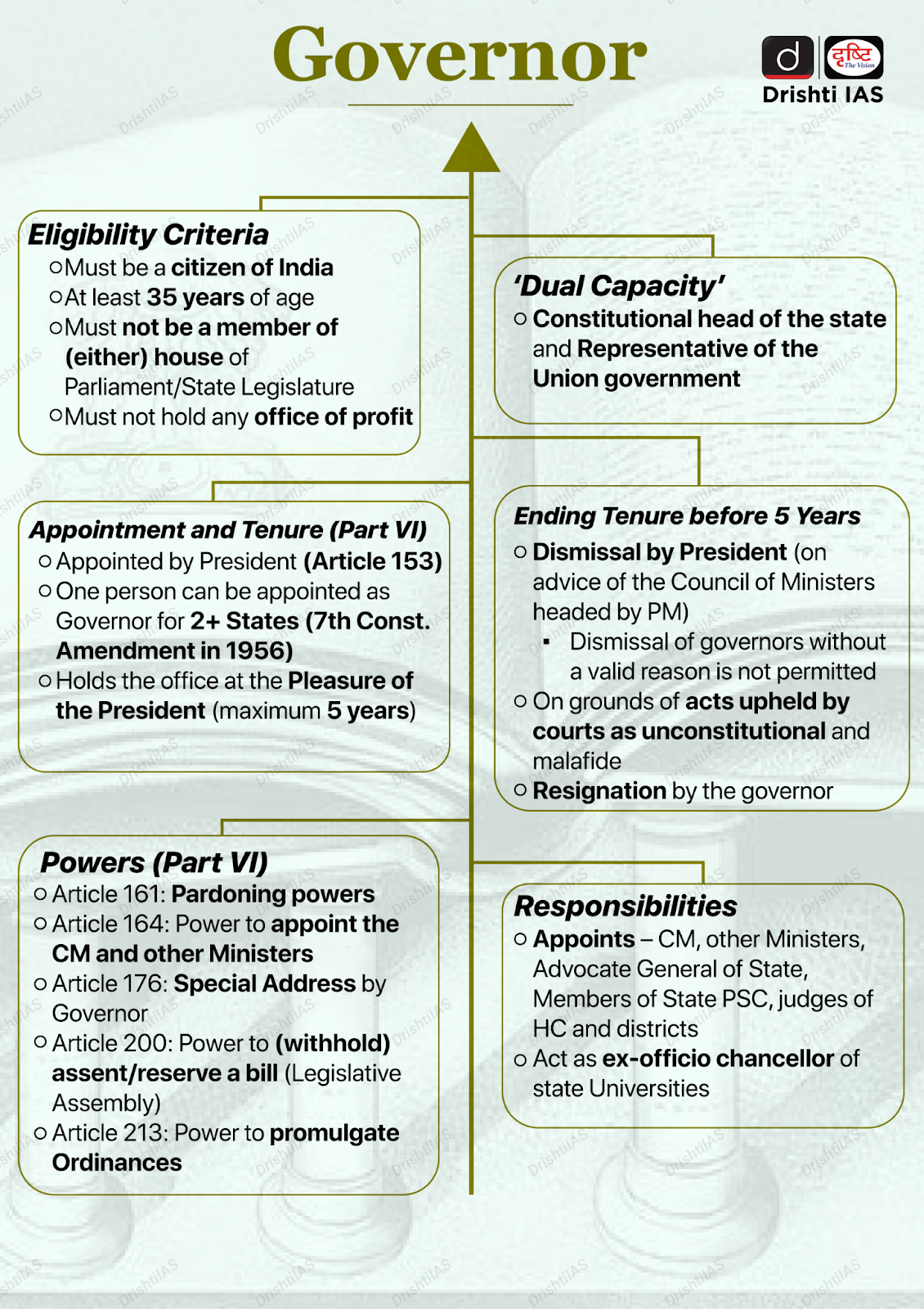
What are the Key Controversies Associated with the Role of Governors in India?
- Role as Chancellor of State Universities: In most cases, the Governor serves as the ex-officio Chancellor of state universities. Tensions arise when the Governor acts contrary to the state government’s advice, especially in Vice-Chancellor appointments or university administration.
- This results in conflicts over institutional autonomy, the limits of the Governor’s discretionary power, and the broader tussle between the central government (which appoints the Governor) and state governments for control.
- Withholding Assent to Bills: The main flashpoint involves 3 Governor powers, i.e., withholding assent to stall state laws, reserving bills for the President, and prolonged inaction, where bills are left pending for long periods.
- Appointment and Tenure of the Governor: Governors are often seen as political appointees, usually retired politicians or bureaucrats close to the central ruling party, which creates a perception of bias when another party governs the state.
- Their tenure depends on the “pleasure of the President,” allowing the Centre to remove them anytime, especially after a change in government, weakening the independence and dignity of the office.
- Governor’s Legislative Interference: Tensions rise when Governors delay summoning the Assembly or, during a majority crisis, ignore the Chief Minister’s advice to dissolve the house and instead invite a rival to form the government.
- Governors sometimes bypass the Speaker by ordering floor test based on opposition claims and sometimes set procedures (e.g., voice vote vs. physical division) that disadvantage the ruling party.
- Appointment of the Chief Minister: In a Post-Hung Assembly, the Governor's discretion creates tension when they are perceived to bypass the single largest party or invite a coalition whose majority is not demonstrably clear.
- Furthermore, following a CM's Death or Resignation, the Governor's choice of a successor can be highly controversial if the ruling party is internally divided, leading to accusations of partisan interference.
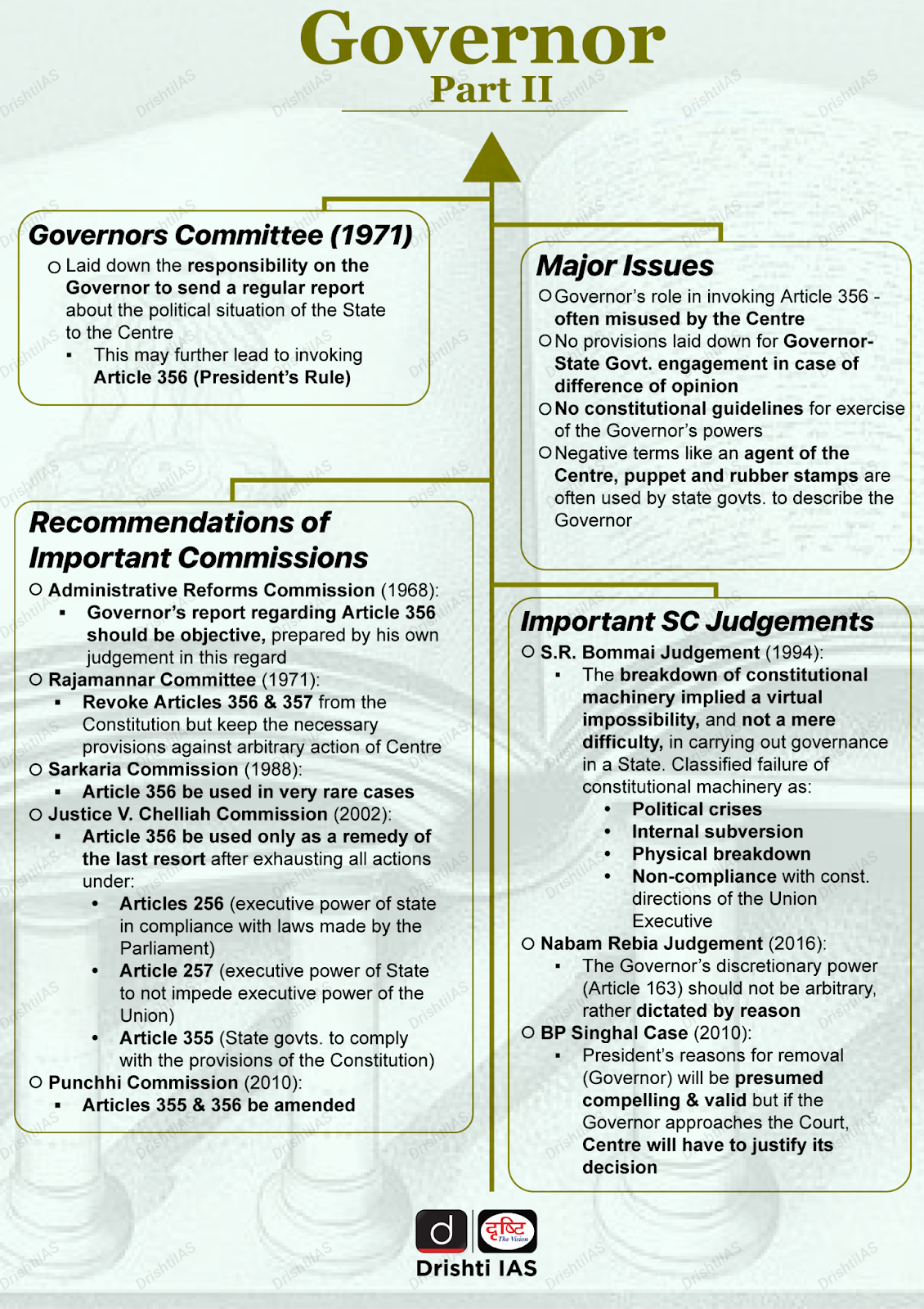
What are the Various Committees/Commissions Related to Reforming the Office and Conduct of the Office of Governor?
|
Committee |
Recommendation |
|
Sarkaria Commission (1988) |
An intergovernmental council should resolve center-state issues, with Article 356 used sparingly and the state assembly dissolved only with Parliament’s approval. |
|
Venkatachaliah Commission (2002) |
Governors complete their five-year term, with early removal requiring consultation with the Chief Minister. |
|
Punchhi Commission (2010) |
The Governor’s Chancellor role should be limited to constitutional duties, Bills must be decided within fixed timelines (six months for reserved Bills), and stronger safeguards are needed to prevent Article 356 misuse. |
What are the Key Judicial Pronouncements on Resolving Tensions between the State & the Governor?
- Nabam Rebia Case 2016: The SC clarified that the Governor’s power to summon or prorogue the Assembly is not discretionary and must be exercised only on the aid and advice of the Council of Ministers.
- Shivraj Singh Chouhan Case, 2020: The SC ruled that both the Speaker and the Governor can order a floor test-the Speaker, if the government is likely to have lost its majority, and the Governor, if credible information suggests that the majority is in doubt.
- State of Tamil Nadu v The Governor of Tamil Nadu Case, 2023: The Court ruled Governors must grant assent to re-passed bills unless materially different, setting strict deadlines i.e., one month to withhold assent, three months for actions against Cabinet advice, and one month for reconsidered bills.
- 2025 Presidential Reference on Governor’s Powers (under Article 143): SC held that courts cannot impose rigid timelines on the Governor (or President) for acting on Bills under Articles 200 or 201. It overruled the idea of “deemed assent.” But the Court reiterated that prolonged, unexplained delays may attract limited judicial review.
What Measures can Resolve the Recurring Tensions between State Governments and Governors?
- Codify the Governor's 'Discretion': The SC and Union government should clearly define and exhaustively list the specific circumstances under which the Governor can act in their own discretion, moving beyond the vague provision in Article 163. This would minimize arbitrary interpretations.
- Procedural Reforms: The "floor test" should be the only legally acceptable mechanism to prove a majority. The Governor should only administer the oath to the claimant with the most support, who must prove majority on the House floor within 48 hours.
- Institutionalize the Appointment Process: Establish an independent collegium or committee (e.g., comprising the Prime Minister, Chief Justice of India, Lok Sabha Speaker, and the concerned Chief Minister) to select Governors. This would depoliticize appointments and ensure impartiality.
- Adhere to Established Conventions: Governors should act on the aid and advice of the Council of Ministers, and maintain transparent, regular communication with the Chief Minister to ensure cooperation rather than confrontation.
- Implementing Commission Recommendations: Key reforms proposed by the Sarkaria Commission (1988) and Punchhi Commission (2010)—including consulting the Chief Minister before appointing a Governor and selecting eminent persons from outside the state—should be seriously implemented.
Conclusion
The recurring tensions between State Governments and Governors stem from ambiguous discretionary powers and political appointments. A lasting resolution requires implementing key committee reforms, codifying the Governor's discretion, and fostering strict adherence to the constitutional spirit of acting on the elected government's aid and advice.
|
Drishti Mains Question: Q. The office of the Governor has often been described as a 'linchpin' in Centre-State relations, yet it frequently becomes a 'flashpoint'. Analyze the reasons for this paradox and suggest remedial measures. |
Frequently Asked Questions (FAQs)
Q. What constitutional provision governs the Governor’s discretionary powers?
Article 163 allows discretionary powers, but the Governor must generally act on the aid and advice of the Council of Ministers.
Q. What are the key recommendations of the Sarkaria Commission regarding Governors?
Limit unrelated statutory powers, respect five-year tenure, and ensure consultation before removal or appointment.
Q. What was the Supreme Court's stance in the 2025 Presidential Reference under Article 143?
While the Court declined to impose rigid timelines for assent to bills, it affirmed that prolonged and unexplained delays by the Governor are subject to judicial review.
UPSC Civil Services Examination Previous Year Questions (PYQs)
Prelims
Q. Consider the following statements: (2018)
- No criminal proceedings shall be instituted against the Governor of a State in any court during his term of office.
- The emoluments and allowances of the Governor of a State shall not be diminished during his term of office.
Which of the statements given above is/are correct?
(a) 1 only
(b) 2 only
(c) Both 1 and 2
(d) Neither 1 nor 2
Ans: (c)
Q. Which of the following are the discretionary powers given to the Governor of a State? (2014)
- Sending a report to the President of India for imposing the President’s rule
- Appointing the Ministers
- Reserving certain bills passed by the State Legislature for consideration of the President of India
- Making the rules to conduct the business of the State Government
Select the correct answer using the code given below:
(a) 1 and 2 only
(b) 1 and 3 only
(c) 2, 3 and 4 only
(d) 1, 2, 3 and 4
Ans: (b)
Q. Which one of the following statements is correct? (2013)
(a) In India, the same person cannot be appointed as Governor for two or more States at the same time
(b) The Judges of the High Court of the States in India are appointed by the Governor of the State just as the Judges of the Supreme Court are appointed by the President
(c) No procedure has been laid down in the Constitution of India for the removal of a Governor from his/her post
(d) In the case of a Union Territory having a legislative setup, the Chief Minister is appointed by the Lt. Governor on the basis of majority support
Ans: (c)
Mains
Q. Discuss the essential conditions for exercise of the legislative powers by the Governor. Discuss the legality of re-promulgation of ordinances by the Governor without placing them before the Legislature. (2022)
Q. Though the federal principle is dominant in our constitution and that principle is one of its basic features, but it is equally true that federalism under the Indian Constitution leans in favour of a strong Center, a feature that militates against the concept of strong federalism. Discuss. (2014)
World AIDS Day 2025
Why in News?
The Ministry of Health and Family Welfare organised the World AIDS Day 2025 observance under the theme “Overcoming disruption, transforming the AIDS response” and highlighted the national progress on AIDS control.
- In 1998, WHO marked the first World AIDS Day on 1st December to recognize the crucial role of civil society in driving a global response to HIV/AIDS.
What is Human Immunodeficiency Virus (HIV)/AIDS?
- About: HIV is a virus that attacks the immune system, primarily damaging CD4 cells (white blood cells), weakening the body and making it vulnerable to infections and cancers.
- Transmission: Occurs via direct contact with infected bodily fluids (blood, semen, breast milk, vaginal fluids) like unprotected sex, shared needles, or unsterilized tattooing. It is not spread through casual contact.
- Symptoms: Early signs include fever and rash. Later stages may involve swollen lymph nodes, weight loss, and diarrhea. Severe HIV can lead to opportunistic illnesses such as tuberculosis, meningitis, and cancers like lymphoma.
- Treatment: There is no cure. However, lifelong daily Antiretroviral Therapy (ART) effectively controls the virus.
- Global Response: UN Sustainable Development Goal 3.3 aims to end the HIV epidemic as a public health threat by 2030.
What is India's National AIDS Control Programme (NACP)?
- About NCAP: National AIDS Control Programme (NACP) is India’s initiative for the prevention, control, and management of HIV/AIDS.
- It is implemented by the National AIDS Control Organisation (NACO) under the Ministry of Health and Family Welfare.
- AIDS stands for Acquired Immunodeficiency Syndrome. It is the advanced, final stage of infection caused by the Human Immunodeficiency Virus (HIV).
- Evolution of NACP: Launched in 1992, NACP has evolved through several phases, each with a strategic focus:
- NACP I (1992–1999): Launched India's first comprehensive programme to slow the spread of HIV.
- NACP II (1999–2006): Focused on reducing transmission and strengthening national capacity.
- NACP III (2007–2012): Aimed to halt and reverse the epidemic by scaling up prevention and integrating services.
- Established District AIDS Prevention and Control Units (DAPCUs).
- NACP IV (2012–2017 & extended to 2021): Accelerated reversal and integrated care.
- It aimed 50% reduction in new infections (compared to 2007 baseline)Key initiatives included:
- The HIV/AIDS (Prevention and Control) Act, 2017, prohibiting discrimination.
- Mission Sampark to re-engage People Living with HIV (PLHIV) lost to follow-up.
- 'Test and Treat' policy and universal viral load monitoring.
- NACP V (2021–2026): A Central Sector Scheme with an outlay of over Rs 15,000 crore, aligning with SDG 3.3 to end AIDS as a public health threat by 2030.

- Achievement of NACP:
- India’s HIV prevalence dropped from 0.33% in 2010 to 0.20% in 2024, far below the global average of 0.70%, showing India’s strong control over the epidemic.
- New HIV infections fell from 1.25 lakh in 2010 to 64,500 in 2024—a 49% decline, better than the global reduction of 40%.
- India now accounts for only 5% of global new infections (1.3 million in 2024), reflecting effective government efforts and wider ART access.
- Under NACP-V, HIV testing increased from 4.13 crore (2020-21) to 6.62 crore (2024-25), People on antiretroviral treatment rose from 14.94 lakh to 18.60 lakh.
Frequently Asked Questions (FAQs)
Q. What is HIV and how is it transmitted?
HIV attacks the immune system, primarily CD4 cells, and spreads via infected bodily fluids—blood, semen, vaginal fluids, or breast milk. Casual contact does not transmit the virus.
Q. What is the primary goal of the National AIDS Control Programme (NACP) Phase-V?
NACP-V aims to end AIDS as a public health threat by 2030, aligning with Sustainable Development Goal (SDG) 3.3, through comprehensive prevention, testing, and treatment.
Q. What are the key achievements of India under NACP-V?
HIV testing increased from 4.13 crore to 6.62 crore, ART coverage rose from 14.94 lakh to 18.60 lakh, and viral load testing nearly doubled.
UPSC Civil Services Examination Previous Year Question (PYQ)
Q. Which of the following diseases can be transmitted from one person to another through tattooing? (2013)
- Chikungunya
- Hepatitis B
- HIV-AIDS
Select the correct answer using the codes given below:
(a) 1 only
(b) 2 and 3 only
(c) 1 and 3 only
(d) 1, 2 and 3
Ans: (b)
Q. Which one of the following statements is not correct? (2019)
(a) Hepatitis B virus is transmitted much like HIV.
(b) Hepatitis B unlike Hepatitis C, does not have a vaccine.
(c) Globally, the number of people infected with Hepatitis B and C viruses arc several times more than those infected with HIV.
(d) Some of those infected with Hepatitis B and C viruses do not show the symptoms for many years.
Ans: (b)
Q. With regard to the transmission of the Human Immunodeficiency Virus, which one of the following statements is not correct? (2010)
(a) The chances of transmission from female to male are twice as likely as from male to female
(b) The chances of transmission are more if a person suffers from other sexually transmitted infections
(c) An infected mother can transmit the infection to her baby during pregnancy, at childbirth and by breast feeding
(d) The risk of contracting infection from transfusion of infected blood is much higher than an exposure to contaminated needle
Ans: (a)
Q. Consider the following statements: (2010)
- Hepatitis B is several times more infectious than HIV/AIDS
- Hepatitis B can cause liver cancer
Which of the statements given above is/are correct?
(a) 1 only
(b) 2 only
(c) Both 1 and 2
(d) Neither 1 nor 2
Ans: (c)
Assam’s Three-Tier Classification of STs
Why in News?
Assam is facing unrest after a Group of Ministers (GoM) proposed a new three-tier Scheduled Tribes (ST) classification to grant ST status to six communities. While the move has satisfied the applicant groups, it has triggered strong opposition from existing tribals, sparking protests across the state.
What did Assam’s GoM Recommend on ST Classification?
- The GoM proposed a three-tier ST structure:
- ST (Plains): Continues for existing tribal communities in the plains, with Moran, Matak and Koch Rajbongshi community of undivided Goalpara district also recommended for inclusion, without affecting current beneficiaries.
- ST (Hills): Remains unchanged for existing hill tribes.
- ST (Valley): Proposed a new ST (Valley) category for Ahom, Chutia, Tea Tribes, and Kock-Rajbongshi (excluding undivided Goalpara district).
- The GoM said this structure would let the state reorganise reservations without reducing the existing entitlements of ST (Plains) and ST (Hills).
- Separate quotas would apply for state jobs and education, but all groups would share a single ST list for central services.
- Notes that Parliament must pass special legislation for statutory approval of the three-tier classification.
How are Scheduled Tribes Notified in India?
- Article 366(25): “Scheduled Tribes” refers to the tribes or tribal groups that are recognised as STs under Article 342.
- Article 342: The President can notify which tribes or tribal groups are recognised as Scheduled Tribes for each State or Union Territory, after consulting the Governor.
- Any later inclusion or removal from this ST list can be done only by Parliament through legislation, not by executive notification.
- ST Categorization: The term “Scheduled Tribes” appears in the Constitution, but it does not lay down criteria for identifying them.
- The government set up the Lokur Committee in 1956, which defined a tribe using criteria such as primitive traits, a distinctive culture, geographical isolation, shyness of contact with the wider community, and social and economic backwardness.
- Before independence, the 1931 Census described such groups as “backward tribes” living in excluded or partially excluded areas.
- In State of Punjab v. Davinder Singh (2024), the Supreme Court upheld the validity of sub-classifying SCs and STs and allowed states to create sub-groups to ensure fair distribution of benefits.
- Reservation in Services/ Posts:
- Article 16(4): Permits reservations for backward classes who are inadequately represented in state services.
- Article 46: The State must promote the educational and economic interests of weaker sections, especially SCs and STs, and protect them from social injustice and exploitation.
- Article 335: The claims of SCs and STs must be considered in appointments to Union or State services, while maintaining administrative efficiency.
Frequently Asked Questions (FAQs)
Q. Who notifies Scheduled Tribes under the Constitution?
The President notifies STs for each State/UT after consulting the Governor (Article 342); additions/removals can be made only by Parliament through law.
Q. Does the Constitution define criteria for identifying Scheduled Tribes?
No — the Constitution names STs but does not define criteria; the Lokur Committee (1956) recommended criteria like primitive traits, distinct culture, geographic isolation and backwardness.
Q. Can states sub-classify SCs/STs for reservations?
Following State of Punjab v. Davinder Singh (2024), the Supreme Court upheld sub-classification and permitted states to create sub-groups to ensure equitable benefit distribution, subject to law and constitutional limits.
Summary
- Assam’s GoM has proposed a three-tier ST structure — ST (Plains), ST (Hills) and a new ST (Valley) — to include six additional communities.
- The proposal aims to reorganise state-level reservations while keeping existing ST quotas intact.
- Articles 342 and 366(25) outline how STs are notified: the President specifies them after consulting the Governor, and only Parliament can later add or remove groups.
- Articles 15(4), 16(4), 46 and 335 together empower reservation, welfare measures, and protection of SCs/STs while ensuring administrative efficiency.
- The Constitution does not define criteria for identifying STs. The Lokur Committee (1956) proposed criteria such as primitive traits, distinct culture, geographic isolation, shyness of contact and backwardness.
UPSC Civil Services Examination, Previous Year Question:
Prelims
Q.1 Consider the following pairs: (2013)
Tribe State
- Limboo (Limbu) - Sikkim
- Karbi - Himachal Pradesh
- Dongaria Kondh - Odisha
- Bonda - Tamil Nadu
Which of the above pairs are correctly matched?
(a) 1 and 3 only
(b) 2 and 4 only
(c) 1, 3 and 4 only
(d) 1, 2, 3 and 4
Ans: (a)
Q.2 Consider the following statements about Particularly Vulnerable Tribal Groups (PVTGs) in India: (2019)
- PVTGs reside in 18 States and one Union Territory.
- A stagnant or declining population is one of the criteria for determining PVTG status.
- There are 95 PVTGs officially notified in the country so far.
- Irular and Konda Reddi tribes are included in the list of PVTGs.
Which of the statements given above are correct?
(a) 1, 2 and 3
(b) 2, 3 and 4
(c) 1, 2 and 4
(d) 1, 3 and 4
Ans: (c)
Q3. Consider the following organizations/bodies in India: (2023)
- The National Commission for Backward Classes
- The National Human Rights Commission
- The National Law Commission
- The National Consumer Disputes Redressal Commission
How many of the above constitutional bodies?
(a) Only one
(b) Only two
(c) Only three
(d) All four
Ans: (a)
WHO Guideline on the Use of GLP-1
The World Health Organization (WHO) has classified obesity as a chronic disease needing lifelong, comprehensive care, and has released its first guidelines on the use of Glucagon-Like Peptide-1 (GLP-1) weight-loss therapies to tackle the rapidly growing global obesity crisis.
- GLP-1: These medicines can lead to 15–20% weight loss (similar to bariatric surgery) and also provide benefits for cardiovascular, kidney, liver, and sleep apnea conditions.
- WHO GLP-1 Guidelines: Allows conditional long-term use of GLP-1 medicines for adults with obesity, except pregnant women, due to lack of evidence on long-term safety.
- WHO notes that these drugs need to be paired with intensive behavioural support, including healthy diet planning, regular physical activity, and structured lifestyle interventions, and stresses that medication must fit within a comprehensive, lifelong obesity-care plan.
- WHO also highlights the need for equitable access of GLP-1 therapies, warning that current global production will cover less than 10% of those who could benefit by 2030.
- Obesity: WHO defines obesity as having a Body Mass Index (BMI) of 30 or higher in adults. In India, a person is considered obese if their BMI is 25 kg/m² or higher. Morbid obesity occurs when a person’s BMI is 35 or more.
- Global burden: Over 1 billion people live with obesity, causing 3.7 million deaths in 2024, with numbers projected to double by 2030. In India, the National Family Health Survey (NFHS)-5 (2019-21) shows 24% of women and 23% of men are overweight or obese.
| Read more: Rising Obesity Burden in India |
Antarctica Day and 25 Years of NCPOR
India celebrated Antarctica Day (1st December) while also marking 25 years of the National Centre for Polar and Ocean Research (NCPOR), Goa reaffirming its role as the country’s lead institution for polar and ocean exploration.
- Antarctica Day: It commemorates the Antarctica Treaty (1959), that set aside nearly 10% of Earth for peaceful purposes and scientific research.
- The Treaty froze territorial claims to the continent, banned nuclear weapons and waste on the continent, and preserved the entire region south of 60 degrees south latitude for peaceful purposes.
- India has been a Consultative Party since 1983, giving it voting rights and the ability to operate research stations and contribute to Antarctica’s scientific and environmental governance.
- NCPOR: It was established in 1998 under the Ministry of Earth Sciences (MoES), NCPOR is India’s nodal agency for coordinating the Indian Antarctic Programme and maintaining the Maitri (1989) and Bharati (2011) research stations.
- Located in Goa, it leads multidisciplinary polar and Southern Ocean research and has recognised research facilities for doctoral studies.
- NCPOR has established India’s permanent research stations: Dakshin Gangotri, Maitri, Bharati (Antarctica) and Himadri (Arctic), along with the Himalayan research station Himansh.
- The Ministry of Finance has approved Maitri-II, a new East Antarctica research station to be led by NCPOR.
- It plays a key role in India’s Deep Ocean Mission, linking polar science with strategic national priorities.
|
Read more: India's Tryst with Antarctica |
IMF Flags Concerns over India's GDP Data
Why in News?
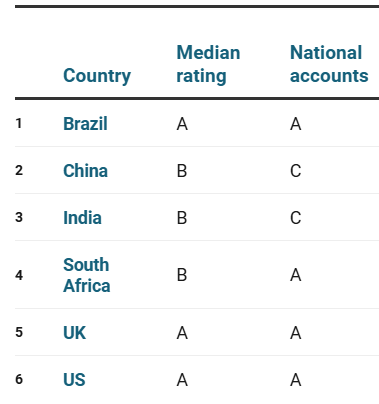
The International Monetary Fund (IMF) has retained its 'C' grade for India's national accounts and government finance data for 2025, signifying persistent methodological shortcomings that somewhat hamper accurate economic surveillance.
- IMF 2025 Assessment: The IMF's Data Adequacy Assessment rates data quality from A (adequate) to D (serious shortcomings). India's 'C' grade indicates data with shortcomings that "somewhat hamper surveillance".
- National Accounts (GDP) Weaknesses:
- Outdated Base Year: Use of 2011-12 base year misrepresents the modern economic structure.
- Flawed Deflation Method: Reliance on Wholesale Price Index (WPI) and single deflation instead of Producer Price Index (PPI) and double deflation introduces bias.
- Data Gaps: Unexplained discrepancies between production and expenditure-side GDP calculations.
- Lack of Granularity: Absence of timely, sector-wise investment data and seasonally adjusted figures.
- IMF Recommendations: Strengthen data quality by prioritising the population census, improving state-level systems, and adopting digital and high-frequency data practices.
- Ensure transparency and capacity by revising GDP and CPI regularly, establishing a Statistical Audit Authority, and increasing resources for the National Statistical Office (NSO).
- Government's Corrective Action: India is undertaking a major statistical overhaul, with a new GDP series (2022-23 base year) and CPI series (2024 base year) set for launch in February 2026.
| Read More: Concerns Related to India’s GDP Data |